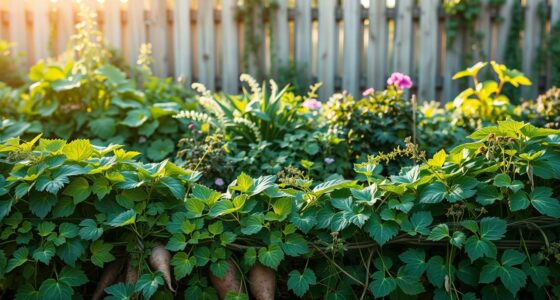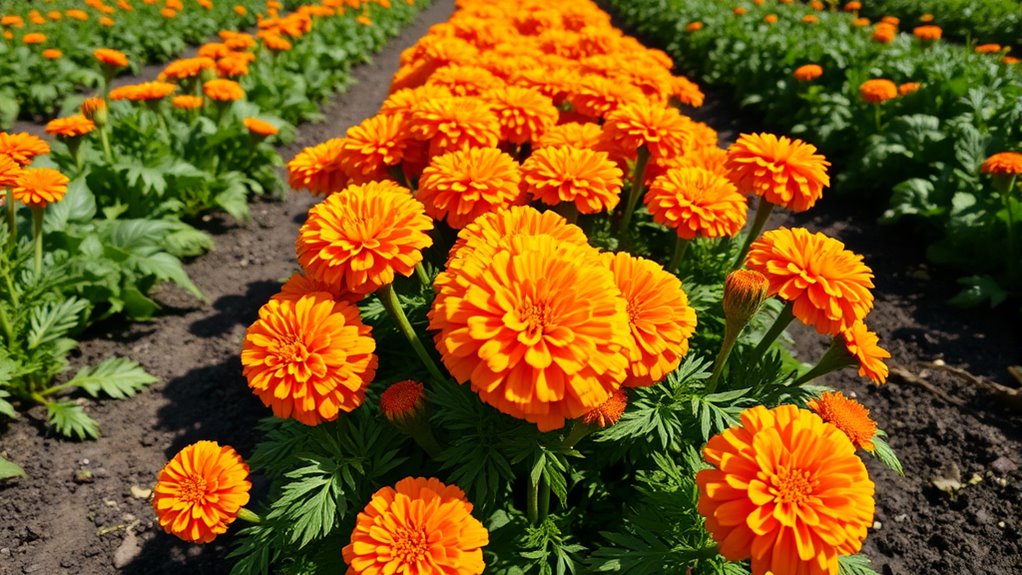

Planting marigolds in your vegetable beds helps naturally repel pests like nematodes, aphids, and whiteflies with their strong scent. They confuse and deter insects, reducing your need for chemical pesticides, and can attract beneficial insects that support your garden’s health. Marigolds also create a protective barrier along bed edges and boost overall plant resilience. Want to discover more about how these vibrant flowers improve your garden? Keep exploring for even more tips.

Get garden gear delivered free with Prime
- Fast, free delivery on millions of items
- Prime Video, Amazon Music and more included
- Member-only deals all year
Key Takeaways
- Marigolds repel pests like nematodes, aphids, and whiteflies with their strong scent, protecting vegetable plants naturally.
- They release compounds that deter root-knot nematodes and create pest-resistant zones in vegetable beds.
- Marigolds attract beneficial insects such as ladybugs, which help control garden pests.
- They promote healthier, more resilient vegetable plants by reducing pest pressure and supporting soil health.
- Marigolds enhance garden aesthetics while contributing to sustainable, chemical-free pest management.
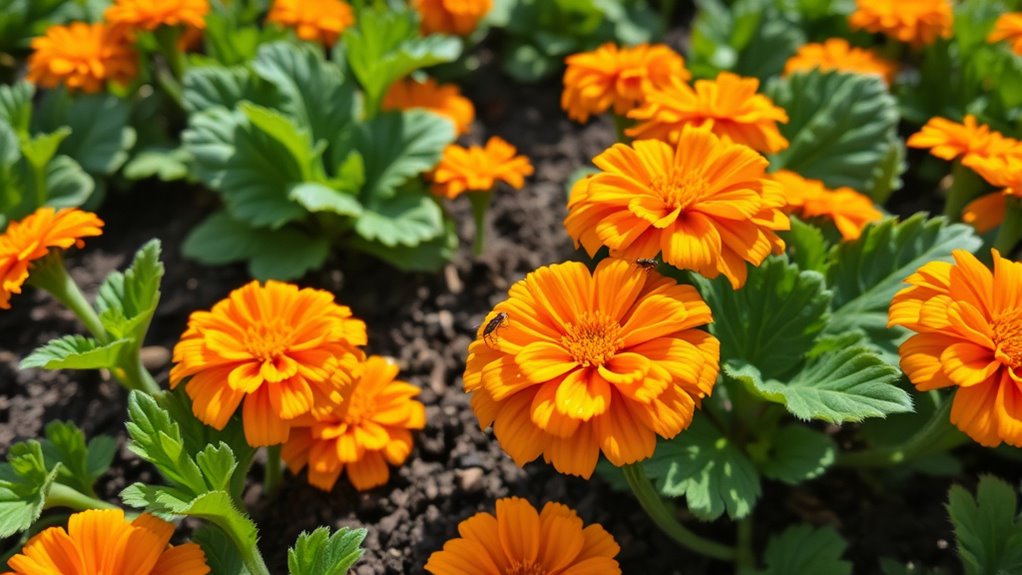
Planting marigolds in vegetable beds is a simple and effective way to boost your garden’s health. These vibrant flowers are more than just attractive additions; they serve practical purposes, especially in pest control and companion planting. When you include marigolds among your vegetables, you’re creating a natural barrier that helps keep certain pests at bay. The strong scent of marigolds confuses and repels insects like nematodes, aphids, and whiteflies, which are common nuisances in vegetable gardens. This means you can reduce your reliance on chemical pesticides, making your garden more environmentally friendly and healthier for your plants. By acting as a natural pest deterrent, marigolds help protect your vegetables without interfering with their growth or flavor.
Planting marigolds in vegetable beds naturally repels pests and promotes healthier, more resilient plants.
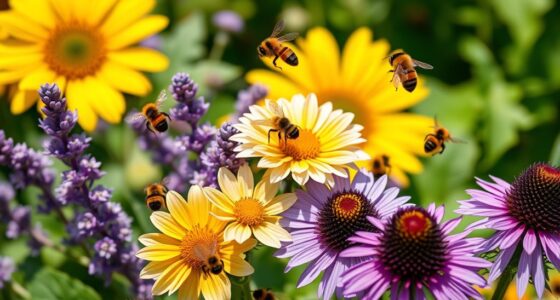
In addition to pest control, marigolds are excellent companions for many vegetables. They can be planted alongside tomatoes, peppers, beans, and squash, among others. The idea behind companion planting is that certain plants can benefit each other by either repelling pests, improving soil health, or enhancing growth conditions. Marigolds release compounds into the soil that are believed to deter root-knot nematodes, which can cause significant damage to root systems. By planting marigolds near vulnerable crops, you’re creating a protective zone that discourages pests from settling in. Moreover, marigolds attract beneficial insects like ladybugs and pollinators such as bees, which help control pest populations and improve fruit and flower production in your vegetable beds. Additionally, building soil health is a key aspect of sustainable gardening that can be supported through companion planting practices.
You’ll find that marigolds are easy to grow and maintain, making them a practical choice for gardeners of all skill levels. They thrive in full sun and well-drained soil, and they bloom throughout the warm months, providing continuous pest protection and visual appeal. Their bright colors also serve as a visual cue that your garden is actively working to deter pests naturally. When planting marigolds, you can place them at the edges of your beds or intersperse them among your vegetables to maximize their pest-repellent benefits. Regular deadheading will keep them blooming and effective for longer periods, ensuring ongoing pest control and companion planting benefits.
Incorporating marigolds into your vegetable garden isn’t just about aesthetics; it’s a strategic move toward a healthier, more resilient garden. You’re leveraging natural pest control methods and enhancing your plants’ growth through companion planting. With minimal effort, you can enjoy a more bountiful harvest, fewer pests, and a garden that’s both beautiful and ecologically balanced. This simple addition of marigolds can make a significant difference in how well your vegetables grow and how easily you manage pests, making your gardening experience more rewarding and sustainable.
marigold plants for vegetable garden
As an affiliate, we earn on qualifying purchases.
As an affiliate, we earn on qualifying purchases.
Frequently Asked Questions
Do Marigolds Attract Beneficial Insects to Vegetable Beds?
Yes, marigolds attract beneficial insects to your vegetable beds. They draw in pollinator attraction, helping plants produce more fruit and vegetables. Plus, marigolds act as pest deterrence by attracting insects that prey on common vegetable pests. By planting marigolds nearby, you encourage a healthy ecosystem, reducing the need for chemical pest control. You’ll notice more pollinators and fewer pests, leading to healthier, more productive vegetable beds.
Can Marigolds Replace Chemical Pest Control Methods Effectively?
Yes, marigolds can effectively replace chemical pest control methods when you use them as natural pest deterrents. They fit well into organic gardening techniques by repelling pests like nematodes and aphids naturally. By planting marigolds around your vegetable beds, you reduce reliance on chemicals, promote a healthier garden, and support sustainable practices. Keep in mind, though, they work best as part of an integrated pest management strategy rather than a sole solution.
How Long Do Marigolds Last Once Planted in Vegetable Beds?
Marigolds typically last about 2 to 3 months once planted in vegetable beds, like a fleeting burst of sunshine. To maximize their companion planting benefits, guarantee you follow marigold planting tips such as planting near your vegetables early in the season and deadheading regularly. Proper care extends their vibrancy, helping them ward off pests and enhance your garden’s health, making their short-lived beauty well worth it.
Are Marigolds Safe for Edible Vegetables When Used as Companion Plants?
Yes, marigolds are safe for edible vegetables when used as companion plants. They offer marigold soil benefits like pest deterrence and improved soil health, which help your vegetables thrive. To maximize these benefits, follow marigold cultivation tips such as planting them near susceptible crops and ensuring proper spacing. This natural approach promotes healthier plants and reduces the need for chemical pest control, making your garden safer and more productive.
What Varieties of Marigolds Are Best for Vegetable Garden Integration?
Think of your garden as a thriving community, and choose French or Signet marigolds for companion planting. These varieties act like vigilant guardians, deterring pests and harmonizing with your vegetables. Their bright blossoms not only add beauty but serve as natural pest deterrents, making them ideal for vegetable garden integration. Stick with these marigolds for a safe, effective, and visually appealing way to protect your edible plants.
Conclusion
Planting marigolds in your veg beds isn’t just about adding color; it’s about inviting pest control, encouraging soil health, and boosting plant growth. It’s about protecting your vegetables, enhancing your garden’s resilience, and creating a vibrant, thriving space. When you choose marigolds, you choose beauty, protection, and productivity. So, embrace these cheerful flowers, enjoy their benefits, and watch your garden flourish—because marigolds do more than just brighten your beds; they transform them.
Fall yard work Picks
leaf blowers
As an affiliate, we earn on qualifying purchases.