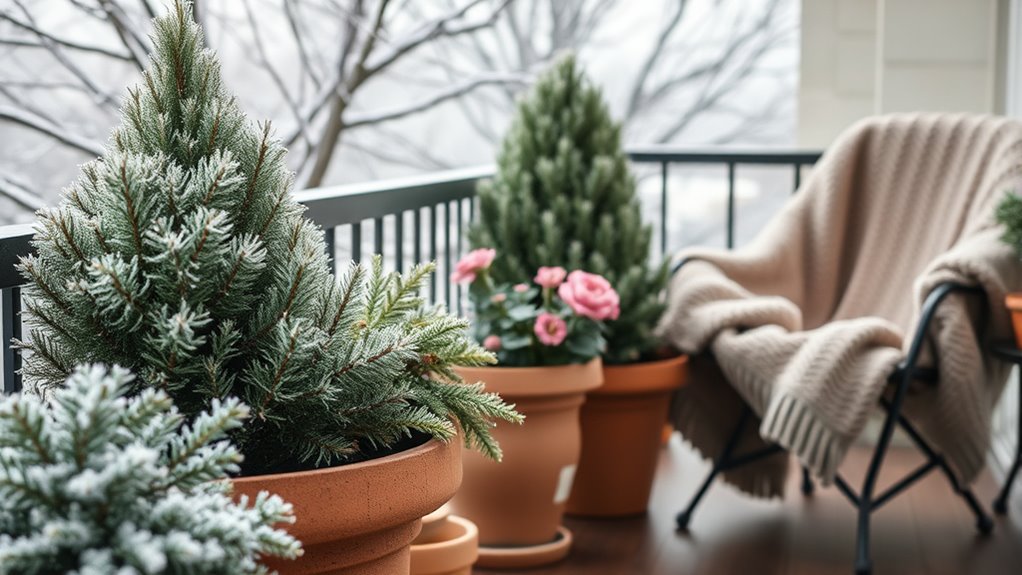

To protect your balcony planters in winter, move delicate plants indoors or to sheltered spots, placing them near south-facing windows for sunlight. Wrap containers with bubble wrap or blankets and elevate them off the ground to reduce cold transfer. Cover soil with mulch or straw to insulate roots, and water sparingly during the warmest part of the day to prevent overwatering. Proper insulation and care help your plants survive cold months—keep going to learn more tips.
Key Takeaways
- Move delicate balcony plants indoors or to sheltered areas before temperatures drop to prevent frost damage.
- Insulate containers with bubble wrap or blankets and elevate planters to reduce cold transfer to roots.
- Cover soil with mulch or straw to insulate roots and maintain soil warmth during winter.
- Reduce watering frequency, ensuring soil stays moist but not waterlogged, and water during the warmest part of the day.
- Group outdoor planters to create a microclimate and protect plants from harsh winds and temperature fluctuations.
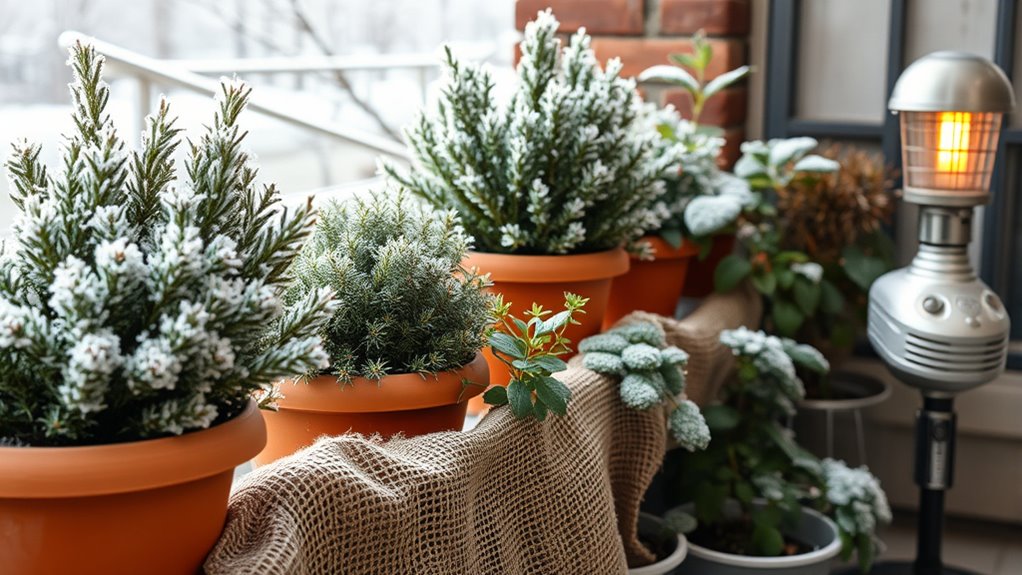
As winter approaches, it’s crucial to prepare your balcony planters to withstand the cold months ahead. One of the first steps is to contemplate indoor plant placement. Before temperatures plummet, move delicate plants indoors or to a sheltered area where they won’t be exposed to frost. This prevents cold damage and ensures your plants stay healthy through the winter. If moving plants isn’t feasible, focus on protecting them directly on the balcony. Grouping plants together can create a microclimate that offers some insulation, helping them withstand the chill.
Container insulation is another critical aspect of winter care. The type of containers you use can substantially influence how well your plants survive the cold. Thick-walled ceramic or composite planters retain heat better than thin plastic ones. If your planters are lightweight or made of materials that don’t insulate well, wrap them in insulating materials like bubble wrap, burlap, or old blankets. This extra layer acts as a barrier, reducing heat loss and protecting roots from freezing. Elevating planters slightly off the ground with bricks or wood blocks also helps prevent cold from seeping in from below, further shielding your plants.
When placing plants indoors, choose a bright spot that receives ample sunlight, like a south-facing window. Proper indoor placement is crucial because sunlight helps plants maintain their vitality during the darker winter months. Ensure they’re not placed near drafts or heating vents, which can cause temperature fluctuations and stress the plants. For outdoor containers that stay outside, focus on insulating the roots. Cover the soil surface with mulch, straw, or leaves to protect roots from extreme temperature swings. This mulch layer acts as a thermal buffer, keeping the soil temperature more stable and preventing it from freezing.
Additionally, consider watering your plants carefully. During winter, plants generally require less water, but avoid letting the soil completely dry out. Overwatering can lead to root rot, especially in cold conditions where evaporation slows down. When watering, do so during the warmest part of the day to reduce the risk of water freezing around roots. Be aware that wood-burning releases pollutants that can contribute to air pollution and climate change, so choosing sustainable heating options is beneficial for both your plants and the environment.
indoor balcony plant grow lights
As an affiliate, we earn on qualifying purchases.
As an affiliate, we earn on qualifying purchases.
Frequently Asked Questions
How Can I Prevent Pests During Winter in Balcony Planters?
To prevent pests during winter in your balcony planters, try planting pest-resistant plants like marigolds or garlic. You can also use natural repellents such as neem oil or insecticidal soap to keep bugs at bay. Regularly inspect your plants for signs of pests, and remove any affected leaves promptly. Keeping your planters clean and well-maintained creates an environment that pests find less appealing, helping your plants stay healthy all winter.
Are There Any Specific Fertilizers Suitable for Winter Planter Care?
Did you know that using the right fertilizer can boost plant health by up to 30% during winter? You should opt for winter-specific fertilizers or organic winter fertilizers, as they provide essential nutrients without overfeeding your plants in cold weather. These fertilizers are specially formulated to support root development and overall vigor during winter months, ensuring your balcony planters stay healthy and vibrant despite the chill.
What Are the Signs of Overwatering in Winter Planters?
If you notice your winter planters have wilting, yellowing leaves, or a musty smell, you’re likely dealing with overwatering. These watering issues can cause drainage problems, leading to waterlogged soil that roots can’t breathe. To prevent this, make certain your containers have proper drainage holes and water only when the top inch of soil feels dry. Adjust your watering habits to avoid excess moisture that harms your plants.
Can I Grow Vegetables in Balcony Planters During Winter?
Yes, you can grow vegetables in balcony planters during winter with proper winter vegetable gardening techniques. Use balcony planter insulation to protect roots from freezing temperatures, and choose hardy varieties like kale or spinach. Make certain your planters have good drainage and position them where they get sunlight. Regularly check soil moisture and adjust watering to prevent overwatering or drying out, giving your winter garden a better chance to thrive.
How Do I Protect Delicate Plants From Frost Damage?
You can protect delicate plants from frost damage by using protective coverings like frost blankets or burlap, which trap heat and shield them from cold winds. Don’t worry—many frost-resistant plants naturally withstand low temperatures, but even they benefit from extra protection during severe freezes. Cover your plants as soon as frost is forecasted, and remove coverings during the day to prevent overheating. This simple step keeps your balcony garden safe through winter.
Conclusion
As winter winds whisper through your balcony, think of your planters as brave little soldiers, weathering the storm. With a touch of protection and a sprinkle of care, you help them stand tall against the cold’s icy grip. Remember, your balcony garden is a tiny universe, and your nurturing hands are the warm sun that keeps it alive. Embrace the challenge, and soon your plants will bloom with resilience when spring returns, brighter than ever.