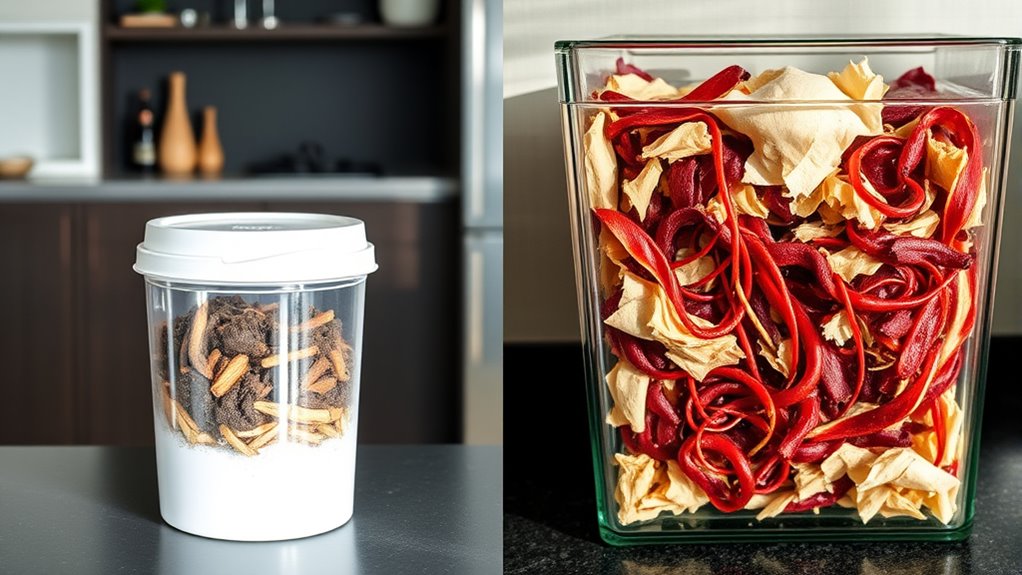

If you’re choosing between Bokashi and vermicomposting for apartment waste, consider your space, effort, and end goals. Bokashi is quick, odor-free, and easy to maintain, fermenting food scraps in a sealed container. Vermicomposting uses worms to turn scraps into rich castings but needs more attention for moisture and temperature control. Both options reduce waste and promote sustainability—if you want to learn how to set up each method effectively, keep exploring further.
Key Takeaways
- Bokashi ferment food scraps quickly in sealed, odor-free containers, ideal for small spaces and low maintenance.
- Vermicomposting uses red worms to produce nutrient-rich compost but requires regular moisture and temperature management.
- Bokashi typically offers faster composting results, while vermicomposting provides high-quality worm castings over a longer period.
- Both methods are odor-controlled and space-efficient, suitable for apartments with limited room.
- Choice depends on preference for speed, effort, and desired end-use of compost (pre-compost or finished soil amendment).
Living in an apartment doesn’t mean you have to miss out on composting. In fact, there are several composting methods designed specifically for small spaces, making waste reduction easier and more accessible for city dwellers. Two popular options are Bokashi and vermicomposting. Both methods help you turn food scraps into nutrient-rich compost, but they work quite differently, so understanding their differences can help you choose the best fit for your lifestyle.
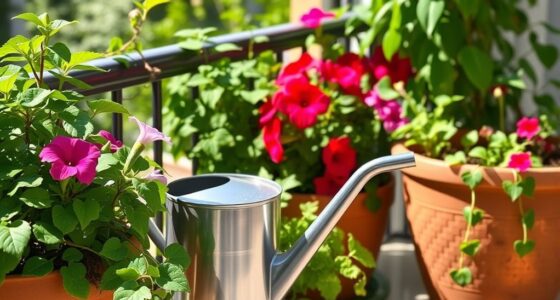
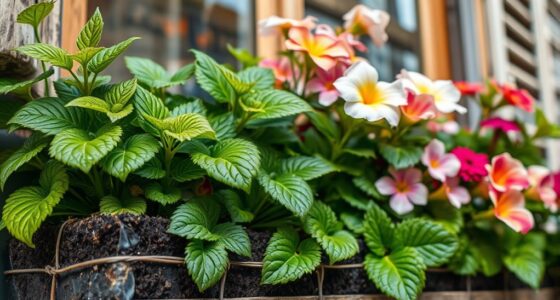
Apartment composting is easy with methods like Bokashi and vermicomposting, perfect for small spaces and eco-friendly living.
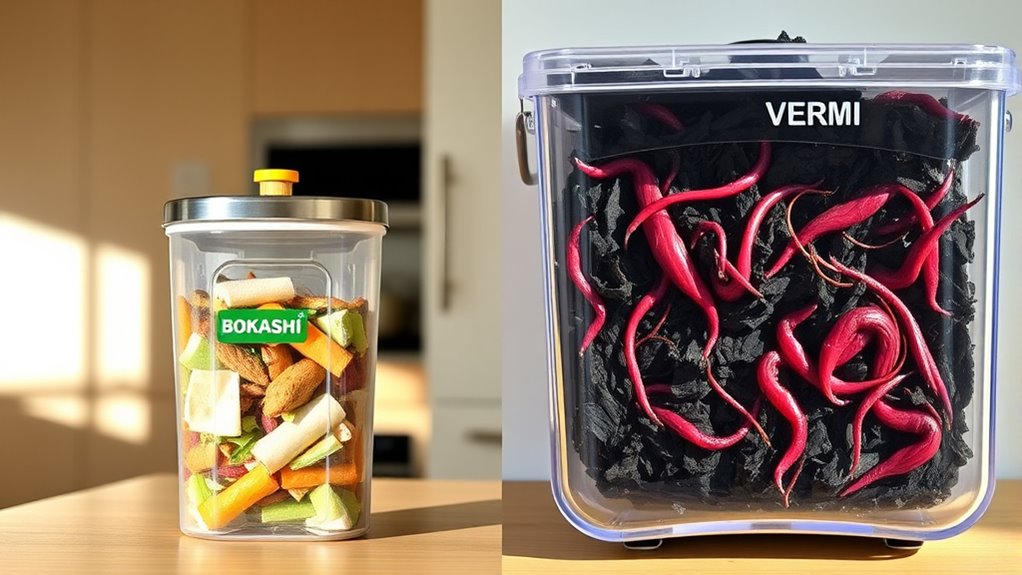
Bokashi composting uses fermentation instead of traditional decomposition. You start by collecting your kitchen scraps—fruit peels, coffee grounds, vegetable scraps—and add them to a sealed container filled with Bokashi bran, which is inoculated with beneficial microbes. As you add waste, you press it down to remove air, creating an anaerobic environment. Within a few weeks, your scraps ferment into a pre-compost that can later be buried in soil or added to a larger composting system. This method is quick, odor-free, and doesn’t require much space, making it ideal for apartments. Plus, because it doesn’t produce leachate or require frequent turning, it simplifies waste reduction for busy urban dwellers.
Vermicomposting, on the other hand, involves using worms—usually red wigglers—to break down organic waste. You set up a worm bin with bedding material like shredded newspaper or coconut coir, then add your kitchen scraps on top. The worms consume the waste, converting it into dark, crumbly compost called worm castings. This process is slower than Bokashi but produces a highly valuable soil amendment perfect for indoor plants or balcony gardens. Vermicomposting does require a bit more attention—it’s essential to maintain proper moisture levels and keep the bin in a cool, dark spot. However, it’s incredibly effective for reducing kitchen waste and creating a sustainable cycle of waste reduction right inside your apartment.
Both methods are compact, odor-controlled, and suitable for small spaces, but they cater to different preferences. If you want a quick, mess-free process with minimal maintenance, Bokashi might be your best choice. If you prefer a more natural, soil-enhancing product and don’t mind a bit of weekly upkeep, vermicomposting can be very rewarding. Whichever method you choose, you’re actively participating in waste reduction and doing your part to help the environment, all within the comfort of your apartment. By incorporating one of these composting methods into your routine, you turn food scraps into valuable resources, making your living space more sustainable without sacrificing convenience or space.
Additionally, understanding how efficient general ledger coding can streamline your home or small business finances can free up more time to focus on sustainable living practices like composting.

Premium Bokashi Composting Starter Kit (Includes 1 Bokashi Bin, 2.2lbs of Bokashi Bran and Full Instructions)
- Complete Composting Starter Kit: Includes bin, bran, and guide
- Ideal for Small Food Waste: Suitable for kitchens with limited waste
- Long-Lasting Bran Supply: Ferments at least 6 bins for 9 months
As an affiliate, we earn on qualifying purchases.
As an affiliate, we earn on qualifying purchases.
Frequently Asked Questions
How Long Does It Take for Bokashi Compost to Be Ready?
It takes about 2 to 4 weeks for bokashi compost to be ready, depending on the fermentation duration and your specific process. During this time, the microbes break down kitchen waste, turning it into pre-compost. Once fermentation is complete, you’ll need to let it sit in the soil for a few more weeks to achieve compost maturity. Patience is key to ensuring your bokashi compost is fully ready for your plants.
Can Vermicomposting Be Done With Household Pets Nearby?
Absolutely, you can vermicompost with household pets nearby, but it’s like walking a tightrope—pet safety and noise concerns matter. Keep worms in a sealed, elevated bin to prevent curious pets from digging. Make sure the bin is quiet and odor-free to avoid disturbing your pets or attracting unwanted attention. With careful setup, you can successfully compost without risking your pets’ safety or creating a noisy environment.
What Are the Common Pests in Apartment Composting Systems?
You might encounter pests like fruit flies, ants, or roaches in your apartment composting system. To prevent these pests, always use pest prevention techniques, such as keeping your compost container sealed tightly and avoiding overfeeding. Regularly monitor your compost for signs of pests, and maintain proper moisture levels. Sealing your container helps keep pests out and reduces odors, making your composting experience cleaner and more successful.
Is There a Smell Difference Between Bokashi and Vermicompost?
You’ll notice a difference in odor comparison between bokashi and vermicompost. Bokashi typically has a milder, sour smell due to fermentation, and its smell intensity is relatively low, making it suitable for apartments. Vermicompost, on the other hand, can produce a richer, earthy aroma, but if not managed well, it might emit a stronger, compost-like smell. Overall, bokashi generally smells less intense than vermicompost.
How Much Space Do Each Composting Method Typically Require?
You’ll find that bokashi composting requires less space, as it uses a compact, airtight container that fits easily on a countertop or small shelf, making it highly space-efficient. Vermicomposting needs a slightly larger setup, like a bin with multiple tiers for worms and bedding, which takes up more room. Both methods suit apartment living, but bokashi’s container size makes it ideal if space is limited.
Conclusion
No matter which method you choose, you’re about to turn your tiny apartment into a lush, jungle-like paradise, bursting with vibrant life and the sweet aroma of compost magic. With bokashi or vermicomposting, you’ll transform kitchen scraps into gold, making your space a bustling eco-factory that outshines even the grandest gardens. Soon, your apartment will smell so fresh and look so green, neighbors will swear you’ve installed a secret rainforest—welcome to your compost-powered paradise!