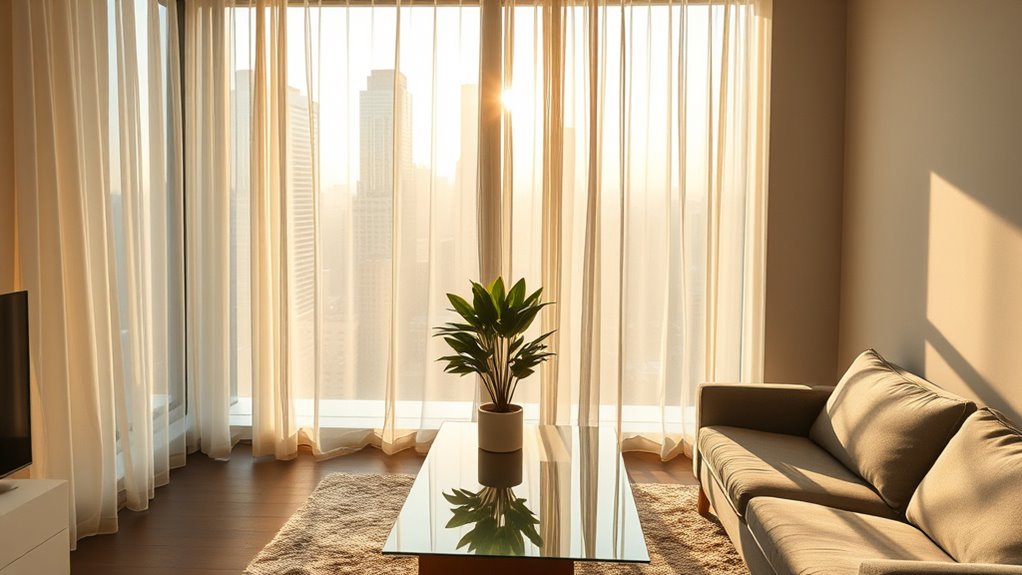

To read light in a city apartment, observe how natural sunlight enters at different times—north-facing windows get limited direct light, while east or west-facing windows offer morning or evening brightness. Use curtains or blinds to control glare, and position your reading spot near windows for maximum daylight. When natural light’s insufficient, choose adjustable task lamps or layered lighting with warm bulbs to create a cozy, well-lit space. Keep exploring to discover more tips.
Key Takeaways
- Maximize natural light by positioning reading areas near east- or west-facing windows.
- Use adjustable task lighting with warm bulbs (3000K-4000K) to supplement natural light.
- Place lamps behind or beside your seat to avoid shadows and glare on your reading material.
- Incorporate layered lighting, combining ambient and task lights, for balanced illumination.
- Utilize smart or dimmable lights to adapt brightness for different times of day and reading comfort.
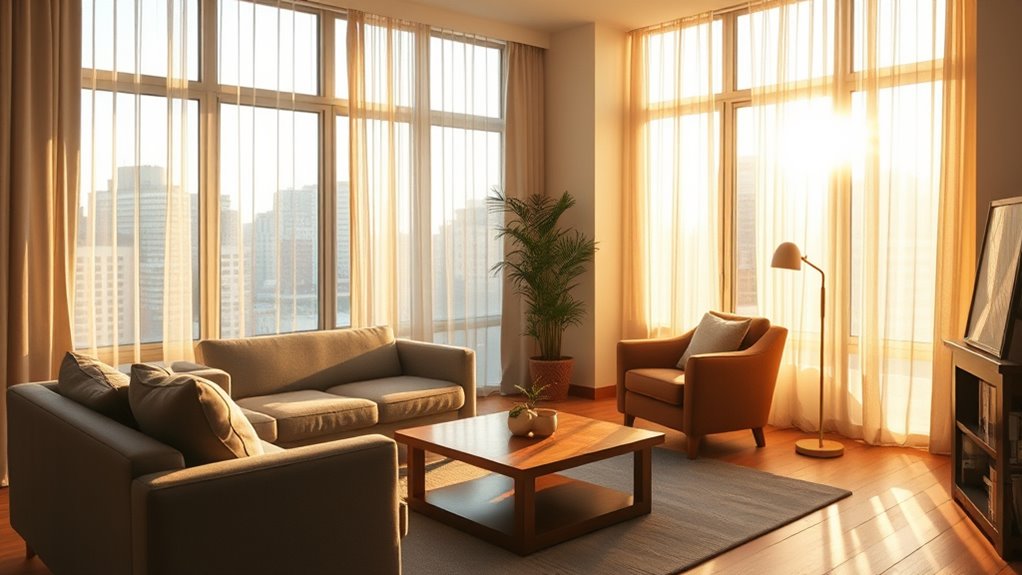
Finding the right reading light in a city apartment can transform your space into a cozy, inviting retreat. It all starts with understanding how window placement influences natural light and how to supplement that with artificial lighting. In a city setting, windows are often limited or positioned in ways that don’t maximize daylight, so it’s essential to work with what you have. If your windows face east or west, you’ll experience bright light in the morning or evening, respectively. Use this natural glow to your advantage by positioning your reading spot near these windows, letting the sunlight do the work during those hours. If your windows are shaded or face a less sunny direction, you’ll need to rely more heavily on artificial lighting.
Artificial lighting becomes your best friend when natural light isn’t enough. Choose adjustable lamps or task lighting that can focus directly on your reading material. A flexible arm lamp or a small, directed LED light can provide bright, focused illumination without disturbing the ambiance of your apartment. When selecting artificial light, opt for bulbs with a color temperature around 3000K to 4000K, which offers a warm, inviting glow that’s easy on your eyes during extended reading sessions. Avoid harsh fluorescent lights, which can cause eye strain and diminish the cozy atmosphere you want.
Choose adjustable, warm-tone task lighting like flexible arm lamps or LED lights for cozy, eye-friendly reading sessions.
You should also consider the placement of your artificial lights relative to your window and seating area. Position lamps so that they illuminate your reading material directly, without casting shadows or creating glare on the page. If you’re sitting near a window, a lamp placed behind or beside you can prevent reflections on your book or screen, making reading more comfortable. Keep in mind that the overall lighting in your apartment should be balanced; a single bright lamp can cause eye fatigue, so layering your lighting with softer ambient sources, like wall sconces or diffused ceiling lights, can make a big difference.
Lastly, don’t forget about dimmable lights or smart bulbs, which allow you to adjust brightness according to the time of day or your mood. This flexibility ensures you always have the perfect lighting for reading, whether it’s a bright midday read or a cozy evening session. Properly managing your lighting setup can also help preserve your eyesight and create a more comfortable environment. When you combine thoughtful window placement with well-chosen artificial lighting, your city apartment becomes an ideal sanctuary for reading, relaxation, and unwinding after a busy day.
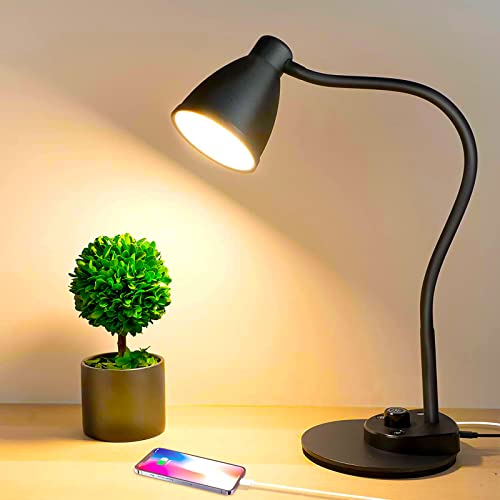
BOHON LED Desk Lamp with USB Charging Port 3 Color Modes Dimmable, Black
- Eye-Caring LED Light: Soft, flicker-free 3000K-5500K light
- Energy Efficient: Up to 90% energy savings with 10W LED
- Auto Dimming & Memory: Adjusts brightness automatically, retains settings
As an affiliate, we earn on qualifying purchases.
As an affiliate, we earn on qualifying purchases.
Frequently Asked Questions
How Does Window Orientation Affect Natural Light?
Your window orientation directly impacts sunlight exposure, affecting how much natural light your apartment receives. If your windows face east, you’ll get morning sunlight; south-facing windows provide consistent, bright light throughout the day. West-facing windows catch the afternoon and evening sun, while north-facing ones offer softer, indirect light. Proper window placement helps you maximize natural light, making your space brighter and more inviting while reducing reliance on artificial lighting.
What Are the Best Plants for Low-Light Apartments?
You can turn your apartment into a lush oasis with low-light plant types like pothos, snake plants, and ZZ plants. These indoor plant care champs thrive in dim corners, making them perfect for city apartments. They’re almost impossible to kill, even if you forget to water them sometimes. With the right care, these plants will brighten your space and breathe life into your home, no matter how little sunlight you get.
How Can I Reduce Glare From Artificial Lighting?
You can reduce glare from artificial lighting by adjusting your lighting fixtures and using light dimming features. Swap harsh bulbs for softer, warmer ones and install dimmers to control brightness. Position fixtures away from direct eye level, and use lampshades or diffusers to soften the light. These steps help create a more comfortable, glare-free environment, making your apartment cozier and easier on your eyes.
What Are Energy-Efficient Lighting Options for Apartments?
Imagine your apartment as a garden, and lighting as the sunlight nurturing your space. Switch to LED bulbs, which act like gentle, energy-saving rays, providing bright light without waste. Incorporate smart lighting systems to control and customize your illumination, much like adjusting the sun’s angle. These options help you save energy, reduce costs, and create a cozy environment, making your apartment both eco-friendly and beautifully lit.
How Does Furniture Placement Influence Light Distribution?
Your furniture arrangement considerably influences light flow in your apartment. By positioning larger pieces away from windows and using reflective surfaces, you allow natural light to spread more evenly throughout your space. Keep pathways clear for unobstructed light flow, and consider placing mirrors opposite windows to bounce light into darker corners. Thoughtful furniture placement maximizes brightness, making your apartment feel more open and inviting without relying solely on artificial lighting.
Conclusion
So, next time you’re battling those relentless city rays sneaking through your tiny window, just remember—you’re basically a light detective. With a little patience and some clever tricks, you’ll master the art of reading light faster than your neighbor’s overpriced curtains can close. Who knew maneuvering urban sunlight could turn into your new favorite hobby? Embrace the glow, or at least pretend you’re in control—after all, you’re practically a city’s light whisperer now.