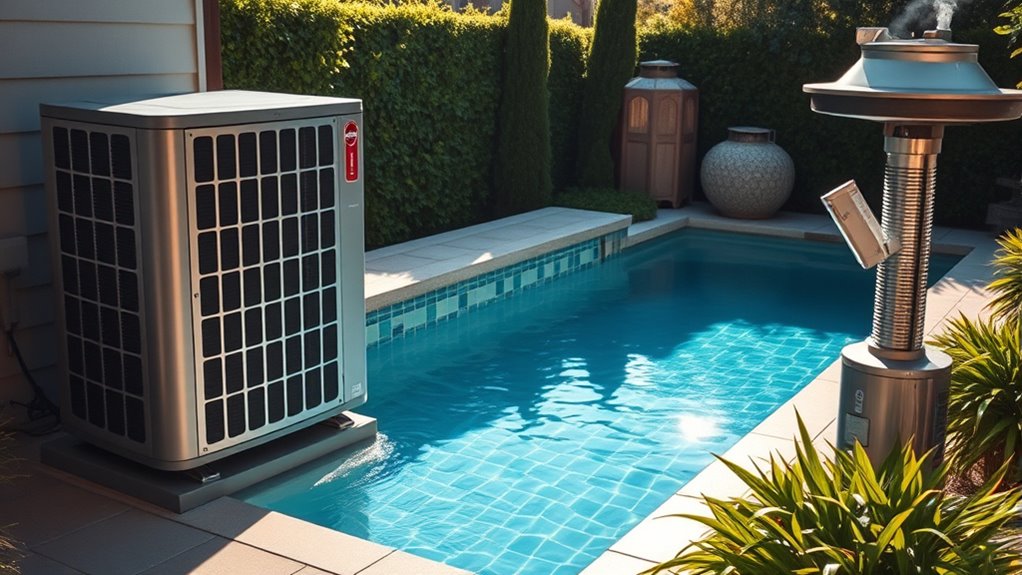

Choosing between a heat pump and gas heating for your endless pool depends on your priorities. Heat pumps are highly energy-efficient, using less electricity and saving you money over time, though they may take longer to heat. Gas heaters deliver quick, consistent warmth but come with higher ongoing fuel costs. If you want to maximize efficiency and reduce long-term expenses, a heat pump is ideal, but gas may suit immediate needs better. Keep exploring to find what fits your pool perfectly.
Key Takeaways
- Heat pumps are more energy-efficient and cost-effective long-term for heating an endless pool.
- Gas heaters provide faster, more reliable warmth, especially in colder climates.
- Installation costs for heat pumps are higher but offset by lower operational expenses over time.
- Gas systems may have lower upfront costs and easier installation if gas lines are available.
- Heat pumps perform well in various weather conditions, offering consistent, efficient pool heating.
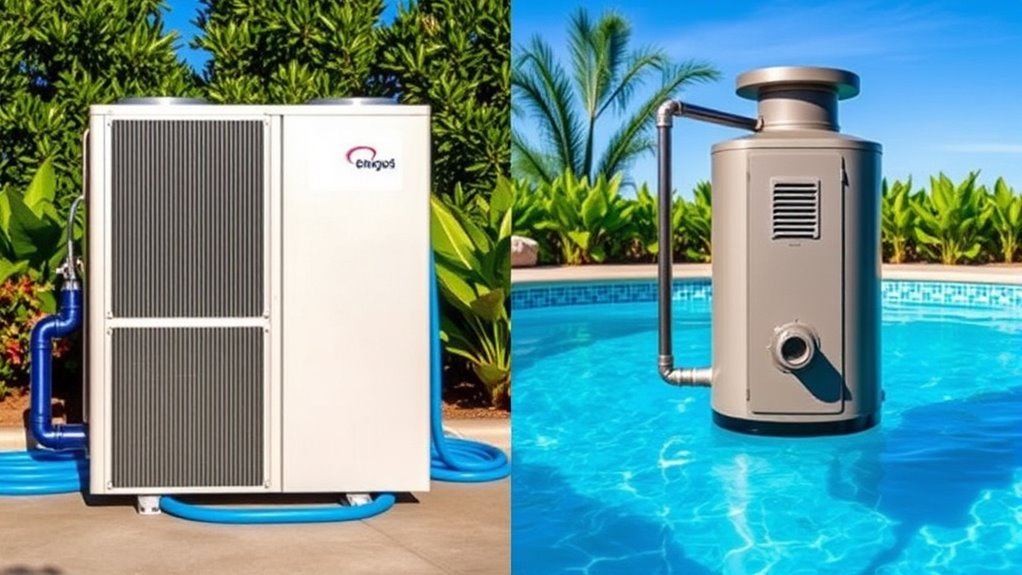
When choosing a heating system for your home, understanding the differences between heat pumps and gas heating is vital. For Endless Pools, which require reliable and efficient heating, this decision can markedly impact your comfort, energy bills, and overall satisfaction. Heat pumps are gaining popularity because of their superior energy efficiency. They work by transferring heat from the outside air into your pool, even in cooler weather, making them a cost-effective choice over time. Since they use less electricity to operate compared to traditional electric or gas heaters, you’ll find that your energy bills are lower, especially during prolonged use. Gas heaters, on the other hand, rely on natural gas or propane to generate heat directly. They can deliver rapid and consistent warmth, which is attractive if you want quick heating or live in colder climates. However, their energy efficiency tends to be lower than heat pumps because they burn fuel directly, leading to higher ongoing operating costs.
When weighing your options, installation costs are a vital factor. Heat pumps typically have higher upfront installation expenses due to the complexity of their units and the need for a suitable outdoor unit. Proper placement and professional installation are necessary to maximize efficiency and ensure longevity. But despite these initial costs, heat pumps generally save you money in the long run through lower energy consumption. Gas heating systems often have lower installation costs initially, especially if you already have a gas line in place. They are simpler to install and can be a more straightforward choice if your budget is tight upfront. However, keep in mind that the ongoing costs of gas, maintenance, and potential repairs can add up over time, making them more expensive overall. Additionally, advancements in trailer music composition techniques have influenced how quickly and effectively warm environments can be created, emphasizing the importance of choosing a reliable heating system.
Frequently Asked Questions
How Do Installation Costs Compare Between Heat Pumps and Gas Heaters?
You’ll find that installation costs for heat pumps are generally lower than gas heaters because they’re easier to install and don’t require venting or extensive modifications. Over time, system longevity favors heat pumps, which tend to last longer with fewer maintenance needs. While initial costs might be slightly higher for gas heaters, their shorter lifespan can make them more expensive overall. Consider your budget and long-term savings when choosing.
What Maintenance Is Required for Heat Pumps Versus Gas Heating Systems?
Oh, the joys of maintenance! With heat pumps, you’ll need to regularly check pool insulation and keep the system’s filters clean to guarantee efficiency. Gas heaters, on the other hand, require annual inspections of burners and vents, plus monitoring system durability. While heat pumps are generally low-maintenance, neglecting insulation can reduce performance. Gas systems demand more frequent upkeep, but both need some TLC to keep your pool perfect.
Are Heat Pumps Effective in Colder Climates for Pool Heating?
Yes, heat pumps can be effective in colder climates for pool heating. They offer excellent energy efficiency and climate adaptability, allowing you to maintain comfortable pool temperatures even in lower temperatures. Modern cold-weather models are designed to operate efficiently despite outdoor chill, saving you money on energy costs. While they may need a backup system in extreme cold, they generally provide reliable, cost-effective heating for your pool year-round.
How Quickly Can Each System Heat the Pool to Desired Temperature?
You can expect gas heaters to heat your pool faster than heat pumps, often in just a few hours, while heat pumps take longer but are more energy-efficient. The efficiency comparison shows heat pumps use less electricity, reducing environmental impact, but gas systems deliver rapid heating. So, if you want quick results and don’t mind higher energy use, gas is better; for eco-friendliness, heat pumps shine.
What Are the Long-Term Operational Cost Differences?
Think of your pool’s heating system as a wise investor. A heat pump acts like a savvy saver, offering higher energy efficiency and lower long-term costs, with a smaller environmental impact. Gas heating, while faster initially, can be more expensive over time due to fuel costs and greater environmental impact. You’ll save more money and reduce your ecological footprint with a heat pump, making it the smarter, greener choice for long-term operation.
Conclusion
Ultimately, choosing between a heat pump and gas heating for your endless pool isn’t just about cost—it’s about the experience you’ll create. Will you savor endless warm swims with quiet efficiency, or face unexpected costs and noise? The decision holds the power to transform your pool moments forever. So, which path will you take? The choice is yours, but remember, one option might just redefine your entire swimming experience—are you ready to discover which?