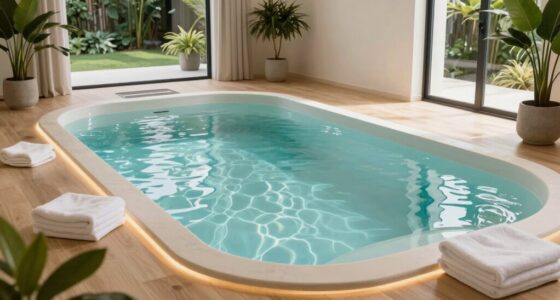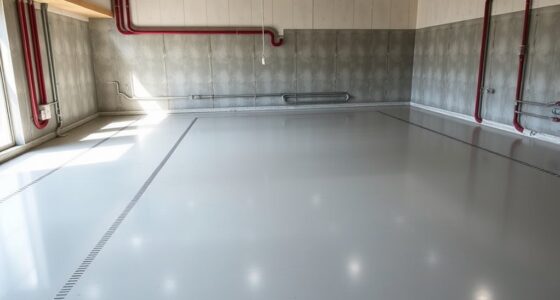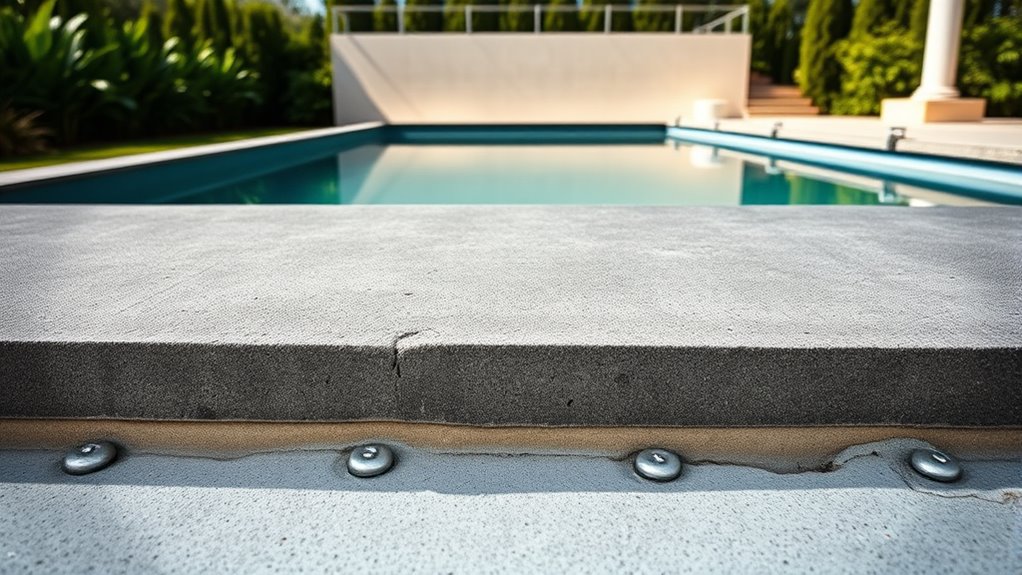

To guarantee your home pool is safe and durable, you need to consider its floor load capacity and structural requirements. This involves evaluating the soil type, compaction, and underlying foundation, as well as the weight of water, equipment, and the pool itself. Proper support prevents shifting, cracking, and long-term damage. Plus, safe covers and adherence to building codes are vital. Keep exploring to learn how to assess and strengthen your pool’s foundation effectively.

Get garden gear delivered free with Prime
- Fast, free delivery on millions of items
- Prime Video, Amazon Music and more included
- Member-only deals all year
Key Takeaways
- Assess soil type and compaction to determine the ground’s load-bearing capacity for pool installation.
- Ensure the foundation can support the combined weight of water, equipment, and the pool structure.
- Consider the weight and durability of pool covers, especially safety covers, in load calculations.
- Follow local safety standards and building codes to select appropriate pool supports and reinforcements.
- Incorporate environmental factors like soil shifting and wind to maintain long-term structural integrity.
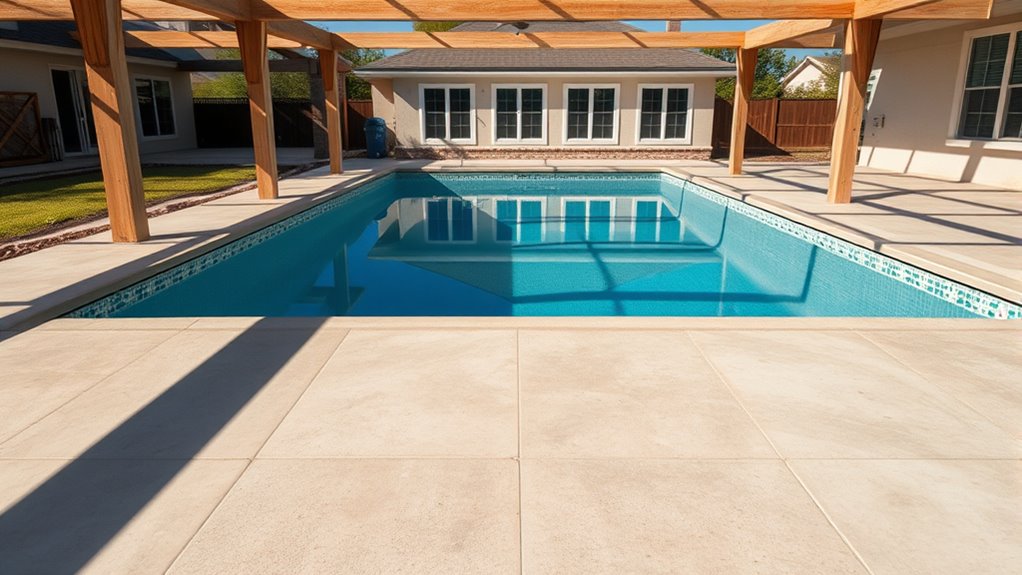
When installing a home pool, understanding the floor load and structural requirements is crucial to guarantee safety and longevity. Your pool’s weight, combined with the water and any additional equipment, puts significant stress on the ground beneath it. If the foundation isn’t strong enough, it could lead to shifting, cracking, or even structural failure over time. To prevent this, you need to evaluate the load-bearing capacity of your chosen location carefully. Soil type, compaction, and the presence of bedrock all influence how much weight the ground can support. Consulting a structural engineer or pool professional can help determine whether your yard can handle the load or if reinforcements are necessary. Proper assessment of floor load capacity** is essential before installation to avoid costly repairs later. Pool cover options also play a role in managing the weight and protecting your investment. Heavy covers, like solid safety covers, can add considerable weight when in place, especially during winter or storm seasons. Choosing the right pool cover isn’t just about keeping debris out; it’s also about ensuring it can handle the weight without damaging the structure or putting undue stress on the ground. Many safety regulations recommend or require specific pool safety covers that meet weight and durability standards. These regulations aim to prevent accidents, especially with children or pets, but they also influence your choice of cover based on safety and load capacity. Always verify that your cover complies with local pool safety regulations to avoid penalties and ensure maximum protection. Structural needs extend beyond the ground itself. The pool shell, decking, and surrounding structures must be designed to withstand the forces exerted by the water and environmental factors like wind or shifting soil. Proper reinforcement ensures that your pool remains stable over the years. You should also consider access points, drainage, and potential ground movement, all of which impact the overall stability. When planning your pool installation, communicate with professionals to ensure all structural elements meet local building codes and safety standards**. These standards are put in place not just to prevent legal issues but to ensure your safety over the lifespan of your pool.
Products Worth Considering

Philips Hue White and Color Ambiance Smart Light Starter Kit with Bridge and 4 A19 Bulbs

Arlo Pro Wireless Security Camera, 2K HDR, 6th Generation, 4-Camera Kit

Blueair Blue Pure 511i Max Smart Air Purifier
As an affiliate, we earn on qualifying purchases.
Frequently Asked Questions
How Can I Reinforce My Existing Pool Deck for Added Weight?
To reinforce your existing pool deck, start with a professional assessment to identify weak spots. You can add extra support beams or posts underneath the deck for better load distribution. Consider installing steel reinforcement or adding a layer of concrete for deck strengthening. These pool reinforcement steps will help guarantee your deck can handle increased weight safely. Always consult a structural engineer to ensure proper, code-compliant deck strengthening.
What Are the Signs of Structural Issues Under My Pool?
Your pool foundation is crying out for help if you notice cracks in the deck, uneven surfaces, or water leaks. These signs point to serious structural issues beneath your pool. Don’t ignore them — schedule regular structural inspections to catch problems early. If ignored, your pool could collapse faster than a house of cards, risking safety and expensive repairs. Address these signs promptly to preserve your pool’s integrity and safety.
Are There Specific Flooring Materials Better for Heavy Loads?
Yes, certain flooring materials are better for heavy loads around your pool. Opt for reinforced concrete or thick, dense materials that provide excellent load distribution and support the pool surface. These materials prevent uneven settling and structural issues. Avoid lightweight or flexible options, as they can compromise your pool’s stability. Ensuring proper load distribution through durable flooring helps maintain safety and longevity for your pool and surrounding structure.
How Does Climate Affect Pool Load Considerations?
Climate impacts your pool’s load considerations by influencing ground stability and material performance. In colder climates, you should make seasonal adjustments, like reinforcing the foundation to prevent shifting from freeze-thaw cycles. Warmer, wetter environments may require extra drainage or reinforced flooring to handle increased moisture and soil movement. Understanding your climate helps you select appropriate materials and design features, ensuring your pool stays safe and durable year-round.
Can I Add a Hot Tub or Spa to My Existing Pool Structure?
You can add a hot tub or spa to your existing pool structure, but you’ll want to verify your current setup can handle the extra weight and water volume. Consider how pool heating might influence water chemistry, as hotter water alters chemical balance. It’s best to consult a structural engineer to ensure your foundation supports the additional load safely, and a professional can help optimize water chemistry for both features.
Conclusion
Don’t let worries about your home’s foundation hold you back from installing a pool. With proper planning and professional guidance, your pool can be safely supported without risking structural issues. Trust the experts to assess your space and recommend the right solutions. After all, enjoying your backyard oasis is worth the investment in a solid, well-designed foundation. Immerse yourself in your dream pool confidently—your perfect outdoor retreat is just a consultation away.