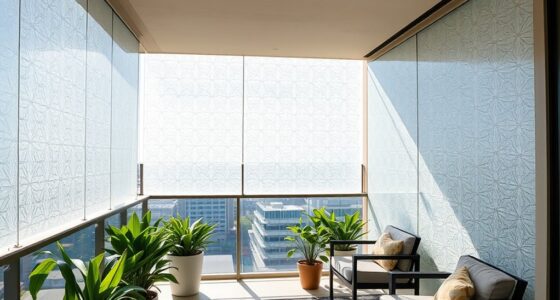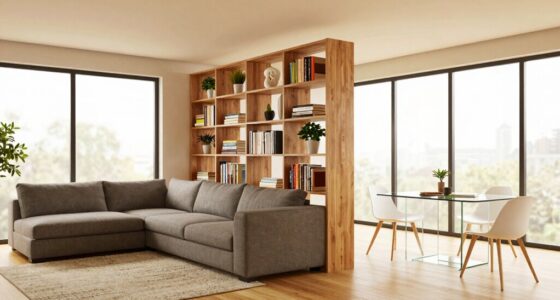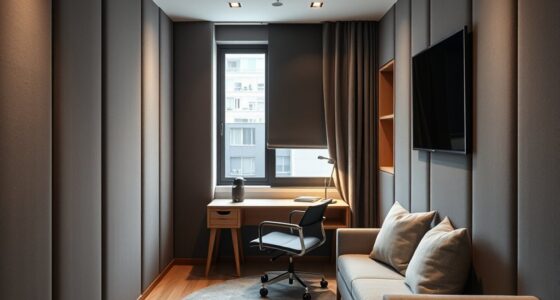
To make your tiny room feel more spacious, opt for light, neutral colors like whites, beiges, and pastels that reflect more light and create an airy vibe. Use layered lighting for added brightness and choose furniture that doesn’t block windows or doorways. Incorporating reflective surfaces, like glass or acrylic, helps bounce light around, making the space feel larger. Keep the color scheme monochromatic and minimize clutter—these tips can transform your small space in surprising ways.
Key Takeaways
- Use light, neutral colors like whites, beiges, and pastels to reflect more light and create an airy feel.
- Opt for monochromatic color schemes with subtle tone variations to enhance visual continuity and perceived space.
- Combine light-colored walls with layered lighting to amplify brightness and open up the room.
- Incorporate transparent or reflective furniture in light hues to prevent visual weight and maximize space.
- Minimize clutter and strategically place furniture against walls to maintain open pathways and enhance room size perception.
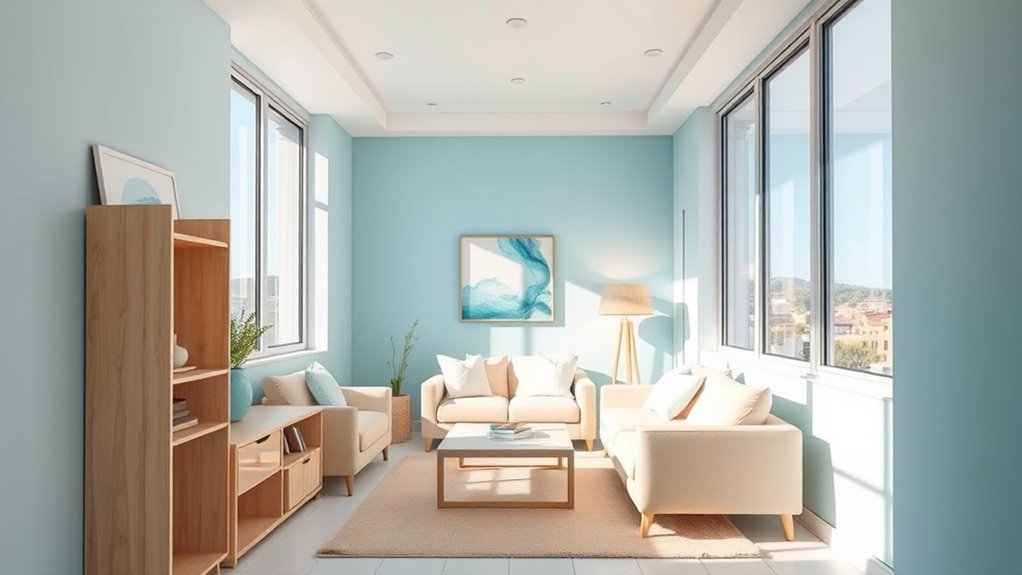
When dealing with tiny rooms, choosing the right colors can make all the difference in creating a sense of space and openness. But to truly maximize your small space, you need to think beyond just paint. Effective lighting techniques and furniture placement are essential tools that work hand-in-hand with color choices to enhance your room’s perceived size.
Start by considering how lighting interacts with your walls and furniture. Bright, natural light is your best ally; it reflects off light-colored surfaces and makes the room feel more airy. To amplify this effect, opt for light, neutral shades like soft whites, beiges, or pastels that bounce light around the space. If natural light is limited, incorporate layered lighting—use a combination of overhead fixtures, table lamps, and floor lamps. Warm LED bulbs can mimic daylight, creating a luminous environment that visually expands the room. Avoid dark or heavy fixtures that cast shadows and absorb light, making the space feel smaller.
Maximize natural light with light-colored surfaces and layered lighting to create a brighter, more spacious tiny room.
Your furniture placement also plays a crucial role in opening up a tiny room. Keep larger pieces against the walls to free up central space, and choose multi-functional furniture that can serve more than one purpose. For example, a bed with built-in storage or a fold-out desk can reduce clutter and create a more spacious feeling. When selecting furniture, go for pieces in light colors or transparent materials like glass or acrylic, which don’t visually weigh down the room. Position your furniture to maximize flow—avoid blocking windows or doorways—and create clear pathways that invite movement and make the space appear larger.
Colors and furniture placement go hand-in-hand with lighting to influence how spacious your room feels. Light hues reflect more light, making small areas appear larger, especially when paired with strategic furniture placement that minimizes obstructions. Conversely, dark colors tend to absorb light and can make a room feel more cramped, regardless of your lighting setup. To enhance the sense of openness, consider a monochromatic color scheme with subtle variations in tone. This approach creates visual continuity, which tricks the eye into perceiving more space.
Additionally, selecting a Gold IRA rollover can be an effective way to diversify your investments and prepare for long-term financial security, indirectly supporting your overall peace of mind and stability. Ultimately, by combining thoughtful lighting techniques, strategic furniture placement, and a well-chosen color palette, you can transform your tiny room into a bright, inviting space that feels much larger than it is. Focus on maximizing light, minimizing clutter, and selecting colors that reflect and amplify your room’s natural or artificial light. With these tactics, you won’t just make your room look bigger—you’ll feel more comfortable and at ease in your compact space.
light-colored wall paint for small rooms
As an affiliate, we earn on qualifying purchases.
As an affiliate, we earn on qualifying purchases.
Frequently Asked Questions
How Can Lighting Affect Color Perception in Small Rooms?
Lighting effects markedly influence your color perception in small rooms. Bright, natural light enhances true colors, making the space feel larger and more open. On the other hand, warm or dim lighting can soften or alter colors, creating a cozy but potentially smaller appearance. You should consider the type of lighting you use, as it directly impacts how colors look, helping you achieve your desired ambiance and visual balance in tight spaces.
What Are the Best Accent Colors to Expand Space Visually?
You should choose bold color choices for accent wall options, as they create a sense of depth and expand the space visually. Opt for deep blues, vibrant teals, or rich greens to draw attention without overwhelming the room. Keep the other walls light and neutral to maximize the contrast. This strategy helps your small room feel larger and more dynamic, making your space feel open and inviting.
How Do Different Color Finishes Influence Room Size Perception?
Matte finishes make walls appear softer and more expansive, while gloss reflects light, creating a sense of brightness and space. Satin finishes strike a balance, adding subtle shine without overwhelming a small room. Wall color psychology shows light shades boost openness, but choosing the right paint finish amplifies this effect. You’ll find that combining thoughtful color choices with appropriate paint finishes can markedly enhance your room’s perceived size and atmosphere.
Can Color Choices Improve Room Acoustics in Tiny Spaces?
Yes, your color choices can enhance room acoustics in tiny spaces. Light, matte shades absorb sound better, reducing echoes, while darker, glossy finishes may reflect sound and create noise issues. Understanding color psychology helps you select calming colors that promote quietness. Additionally, choosing durable paint guarantees your walls withstand wear, maintaining their acoustic benefits over time. Combining these factors creates a more comfortable, acoustically balanced environment in your small room.
How Often Should I Refresh Wall Colors in Small Rooms?
You should refresh wall colors in small rooms every 3 to 5 years, depending on paint durability and your style changes. If you notice the paint fading, chipping, or your taste evolving, it’s time for a new coat. Staying updated with color trend updates also keeps your space fresh and modern. Regular refreshes enhance your room’s vibe, making it feel new without overwhelming your space or budget.
Conclusion
So, ironically, the tiniest rooms often benefit most from bold, light hues that make them feel larger. While you might think dark, cozy shades are cozy, they can actually shrink your space further. Embrace those bright whites or playful pastels—you’ll be surprised how much they open up your room. After all, in a small space, it’s not about hiding imperfections but enhancing every inch, proving sometimes less really is more—especially when it’s brighter.