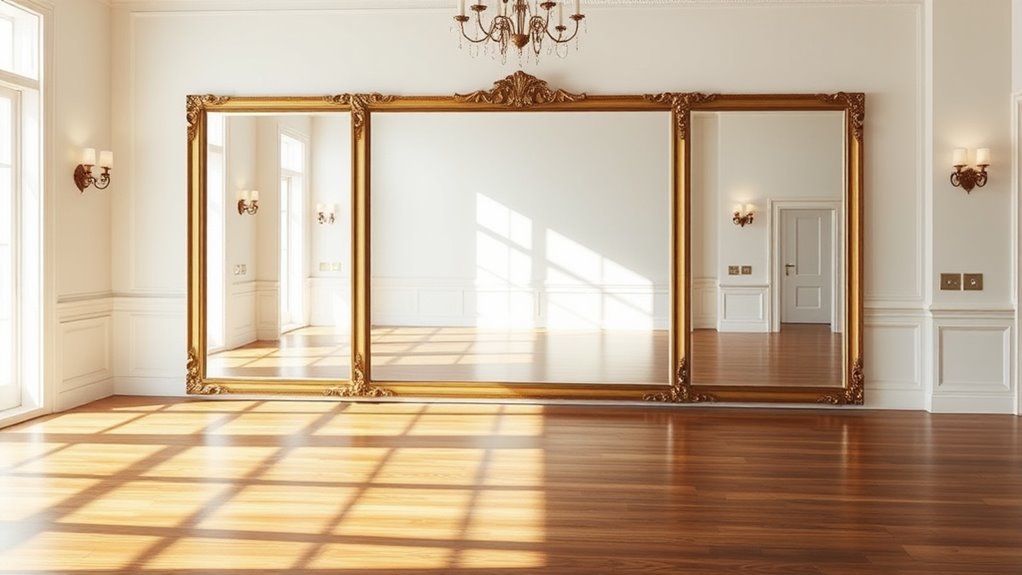

Using mirrors positioned opposite windows or light sources can reflect natural and artificial light, instantly making your room feel bigger and brighter. By bouncing light around the space, mirrors reduce shadows and create the illusion of more depth, especially in small rooms. Strategically arranging ones of different sizes and shapes enhances this effect further. If you’d like to discover simple tips to maximize space and light with mirrors, keep exploring the best placement strategies.
Key Takeaways
- Place mirrors opposite windows to reflect natural light and brighten the room effectively.
- Use large or multiple mirrors to maximize light reflection and create an illusion of space.
- Position mirrors strategically to bounce light into dark corners, reducing shadows and expanding the feeling of size.
- Arrange mirrors to extend reflections, making the room appear larger and more open.
- Incorporate decorative mirrors to enhance aesthetics while amplifying light and spatial perception.
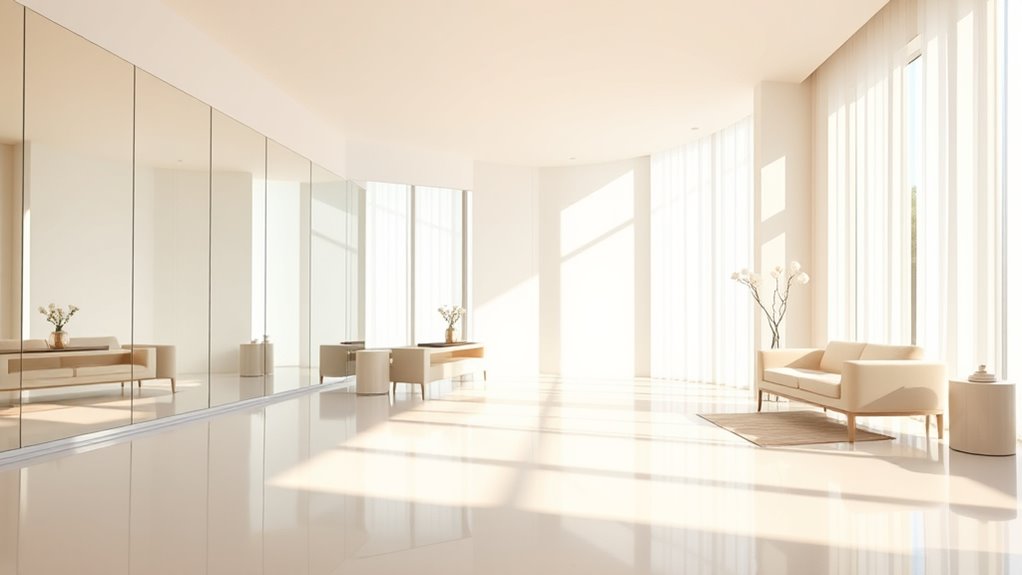
Have you ever wondered how mirrors manipulate light to create reflections? It’s a fascinating process that can dramatically alter the way a room feels, making it seem more spacious and inviting. When you position a mirror strategically, you’re not just adding a decorative element—you’re harnessing the power of light to craft a space illusion that tricks the eye into perceiving more depth and openness. Mirrors reflect both natural and artificial light, bouncing it around the room and effectively expanding the visual boundaries. This brightness enhancement is key; it brightens dark corners and reduces shadows, which can make a small space seem larger than it actually is.
Strategically placed mirrors amplify light, creating the illusion of space and making rooms feel larger and brighter.
By placing a mirror opposite a window or a light source, you amplify the incoming light, creating a luminous environment that feels airy and open. This increased brightness doesn’t just make the room look better; it influences your perception of space. When light floods a room via a mirror, it diminishes the visual clutter and makes the space appear less confined. The reflection acts as an extension of the room, offering a glimpse beyond the physical walls, even if just for a moment. This trick is especially effective in compact rooms or apartments where every inch counts.
You can also use large or multiple mirrors to multiply this effect. Larger mirrors cover more surface area, reflecting more light and expanding the visual space. Multiple smaller mirrors can be arranged creatively to produce a similar effect, creating a dynamic interplay of reflections that amplifies the sense of depth. The key is to position them thoughtfully, so they catch the most light and direct it toward the center of the room. When you do this, you’re not just adding a reflective surface—you’re manipulating how light travels within the space to create an illusion of greater size.
The best part is that this technique is versatile and easy to implement. Whether you’re decorating a tiny bedroom or a cozy living room, a strategically placed mirror enhances brightness and tricks the eye into perceiving a larger, more open space. With a little experimentation, you’ll find that mirrors are powerful tools for transforming your environment, making even the smallest rooms feel more expansive and bright. Ultimately, it’s all about leveraging light’s natural ability to shape perception—turning a simple reflective surface into a clever design element that works magic on your space. Additionally, understanding how contrast ratio influences visual depth can help you optimize lighting and reflections for a more spacious feel.
As an affiliate, we earn on qualifying purchases.
Frequently Asked Questions
Can Mirrors Be Used to Enhance Natural Light in a Room?
Yes, you can use mirrors to enhance natural light in a room. By strategically placing mirrors opposite windows, you increase light reflection, making the space feel brighter and more open. Adjust mirror placement to maximize light flow, and choose larger or multiple mirrors for a more dramatic effect. This simple trick boosts natural illumination and creates a welcoming, airy atmosphere without needing extra lighting fixtures.
What Are the Best Mirror Shapes for Small Spaces?
Think of your small space as a tiny stage. Opt for oval or rectangular mirrors with decorative frames to add elegance without overwhelming. You can choose wall-mounted mirrors for sleekness or freestanding ones for versatility. These shapes and styles reflect light and create depth, making your room feel larger. Select a frame that complements your decor, and you’ll turn your small area into a stylish, expansive illusion.
How Do Mirror Placement Strategies Vary in Different Room Types?
You should tailor your mirror placement to each room type by considering furnishing arrangements and wall color coordination. In living rooms, position mirrors opposite windows to maximize natural light. In bedrooms, place them near dressers or beds to reflect space and create depth. For smaller kitchens, hang mirrors above counters to open up the area, ensuring they complement wall colors for a seamless look. Adjust placement to enhance your room’s function and style.
Are There Any Mirror Styles That Can Make a Room Appear Taller?
Yes, you can make a room appear taller with vertical illusions. Choose tall, narrow mirrors or those with vertical frames to draw the eye upward. Position mirrors to reflect ceiling reflections, which creates the illusion of height. Keep the placement strategic—above furniture or alongside walls—to maximize the effect. This approach helps you visually extend the space, making your room feel more open and airy.
How Do Lighting Conditions Affect the Effectiveness of Mirrors?
Lighting conditions greatly influence how effective reflective surfaces are. Bright, well-lit rooms create more contrast with mirrors, making them stand out and appear larger. If your space has uneven lighting or low contrast, mirrors may seem dull or less impactful. To maximize their effect, guarantee good lighting and use reflective surfaces strategically, like near windows or light sources, to bounce light and enhance the sense of space.
Conclusion
By using mirrors and light wisely, you turn your room into a spacious haven that feels as open as the sky. Think of mirrors as your magic windows, reflecting not just your space but also your personality, while light brightens every corner like a gentle sunbeam. Together, they transform your room into a breathing, living space—an illusion that makes it seem bigger than it truly is. So, open your eyes and embrace these simple tricks to expand your world.