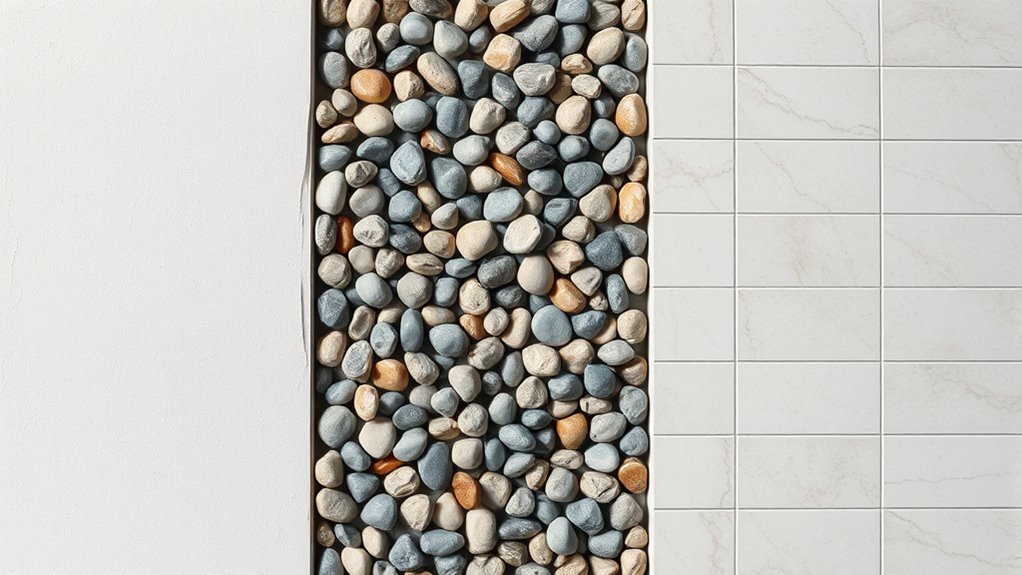

Surface finishes like plaster, pebble, and tile each add unique style and function to your space. Plaster offers smooth or textured surfaces with versatile decorative options, while pebble finishes create natural, tactile outdoor appearances. Tiles provide durable, sleek surfaces with tons of design choices. Regular maintenance, sealing, and repairs help prolong their beauty and durability. If you explore further, you’ll discover how to maximize these finishes to elevate your home’s look and longevity.
Key Takeaways
- Plaster offers customizable smooth or textured surfaces with various decorative finishes like stucco or faux painting.
- Pebble finishes use embedded stones for natural, tactile textures, ideal for outdoor applications.
- Tile surfaces provide durable, stylish options with customizable grout colors, patterns, and inlays.
- Regular maintenance includes gentle cleaning, sealing, and prompt repairs to preserve appearance and durability.
- Decorative techniques across finishes enhance visual interest and can be tailored to suit specific aesthetic preferences.
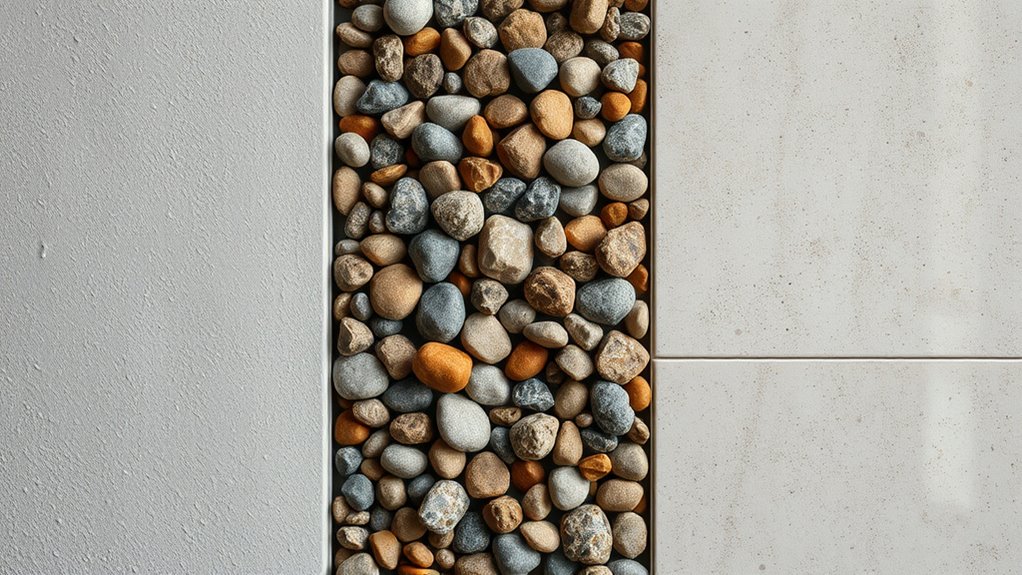
Have you ever wondered how the surface of a material can impact its appearance, durability, and function? When it comes to surface finishes like plaster, pebble, and tile, the choice you make influences not only how your space looks but also how it holds up over time. Understanding these finishes helps you select the right decorative techniques and learn proper maintenance tips to keep them looking their best.
Starting with plaster, this versatile finish offers a smooth or textured surface that can be customized with various decorative techniques. You might choose a polished, glossy look or a matte, rustic appearance depending on your style. Plaster allows for creative finishes like stucco or faux painting that add visual interest and personality to interiors and exteriors alike. To preserve its beauty, regular maintenance tips include gentle cleaning with soft brushes or cloths, avoiding harsh chemicals that can erode the surface, and inspecting for cracks or damage that might need timely repairs. Proper sealing can help enhance durability, especially in high-moisture areas like bathrooms or kitchens.
Pebble finishes, on the other hand, bring a natural, textured feel to surfaces. Composed of small stones embedded into cement or other bases, pebble finishes create a tactile experience that’s both decorative and functional, often used in walkways, pool surrounds, or accent walls. The decorative techniques involve arranging stones to achieve specific patterns or color schemes, adding a unique, organic charm to your space. Maintenance tips for pebble surfaces focus on keeping the stones clean and free of debris, regularly inspecting for loose or damaged stones, and resealing as necessary to prevent water infiltration and staining. This finish’s durability makes it suitable for outdoor applications, but consistent upkeep ensures it looks vibrant and remains intact.
Tile finishes provide a sleek, durable surface ideal for both decorative and functional purposes. With countless styles, colors, and patterns, tiles can create everything from traditional mosaics to modern minimalist designs. Decorative techniques include grout color choices, layout patterns, and custom inlays that personalize your space. To keep tiles looking fresh, maintenance tips involve regular sweeping or vacuuming to remove dirt, prompt cleaning of spills, and periodic sealing of grout lines to prevent staining. Proper installation ensures longevity, and addressing any chips or cracks early on helps maintain a polished appearance over time.
Choosing the right surface finish depends on your aesthetic goals, the intended use of the space, and how much maintenance you’re willing to commit to. Each finish offers unique decorative techniques and maintenance tips that, when properly applied, enhance the beauty and functionality of your environment for years to come.

Meoded Paint & Plaster | Golmex Concrete Look Plaster | Lime/Cement Based Plaster for Interior and Exterior Walls | Concrete Finish
- Easy to Apply: Apply two layers with trowel or spatula
- Versatile Use: Suitable for interior and exterior surfaces
- Concrete Surface Finish: Hides imperfections and enhances durability
As an affiliate, we earn on qualifying purchases.
As an affiliate, we earn on qualifying purchases.
Frequently Asked Questions
Which Surface Finish Is Most Eco-Friendly?
You’ll find that plaster is generally the most eco-friendly surface finish because it uses natural, sustainable materials like lime or clay, which have lower environmental impacts. By choosing eco-friendly materials and supporting sustainable practices, you reduce your carbon footprint. Pebble and tile finishes can be eco-friendly too if made from recycled or locally sourced materials. Prioritize those options to make environmentally conscious choices for your project.
How Do Surface Finishes Affect Indoor Air Quality?
Surface finishes directly impact your indoor air quality by influencing VOC emissions and mold prevention. Finishes with low VOC emissions release fewer harmful chemicals, making your space healthier. Additionally, choosing moisture-resistant finishes helps prevent mold growth, which can degrade air quality and cause health issues. Opt for finishes that are breathable and mold-resistant to maintain a cleaner, safer indoor environment, protecting you and your loved ones.
Can Surface Finishes Be Customized for Specific Textures?
Think of surface finishes as a blank canvas waiting for your creative touch. Yes, you can customize textures with various options, turning ordinary walls into unique art. By selecting from a range of finish pattern choices, you can achieve everything from smooth to highly textured surfaces. This flexibility allows you to craft spaces that reflect your style, blending functionality with personalized design for a truly distinctive look.
What Maintenance Is Required for Different Finishes?
You should follow specific cleaning routines for each finish to keep them looking their best. For plaster, gently dust and occasionally spot clean with mild soap; avoid harsh scrubbing. Pebble surfaces require regular sweeping and damp mopping, while tiles need grout cleaning and sealing. Repair techniques vary: patch plaster cracks promptly, replace damaged pebbles, and re-grout or seal tiles as needed. Proper maintenance prolongs their beauty and durability.
Are There Finishes Suitable for Outdoor Applications?
Yes, some finishes are perfect for outdoor use. You might worry about weather resistance, but options like textured tile or pebble finishes excel in outdoor durability. They withstand rain, sun, and temperature changes better than indoor finishes. By choosing weather-resistant materials, you guarantee your surface stays attractive and intact over time. So, pick finishes specifically designed for outdoor durability, and you’ll enjoy a low-maintenance, long-lasting surface that looks great year-round.
Conclusion
Now that you’ve explored plaster, pebble, and tile finishes, you’re probably wondering which will truly transform your space. Each option offers something unique—yet, the perfect finish might still be waiting just around the corner. Will it be the smooth elegance of plaster, the textured charm of pebbles, or the sleek shine of tiles? The choice is yours, but remember—sometimes, the final touch can change everything in ways you never expected.