
To control wind, evaporation, and splash erosion, you can implement aerodynamic modifications like planting windbreaks or shelterbelts to reduce wind speed around your crops. Proper irrigation timing, such as watering early mornings or late afternoons, minimizes water loss due to evaporation. Additionally, using mulch and contour planting helps prevent splash erosion and preserves soil health. These strategies work together to protect your crops and promote sustainable farming—discover more effective techniques ahead.
Key Takeaways
- Implement windbreaks or shelterbelts to reduce wind speed and protect crops from wind erosion and physical damage.
- Schedule irrigation during early morning or late afternoon to minimize water loss from evaporation.
- Use mulch covers and contour planting to absorb impact and prevent splash erosion of topsoil.
- Combine aerodynamic modifications with precise water management for sustainable soil and crop protection.
- Employ integrated practices like mulching, windbreaks, and targeted irrigation to conserve soil moisture and maintain soil fertility.
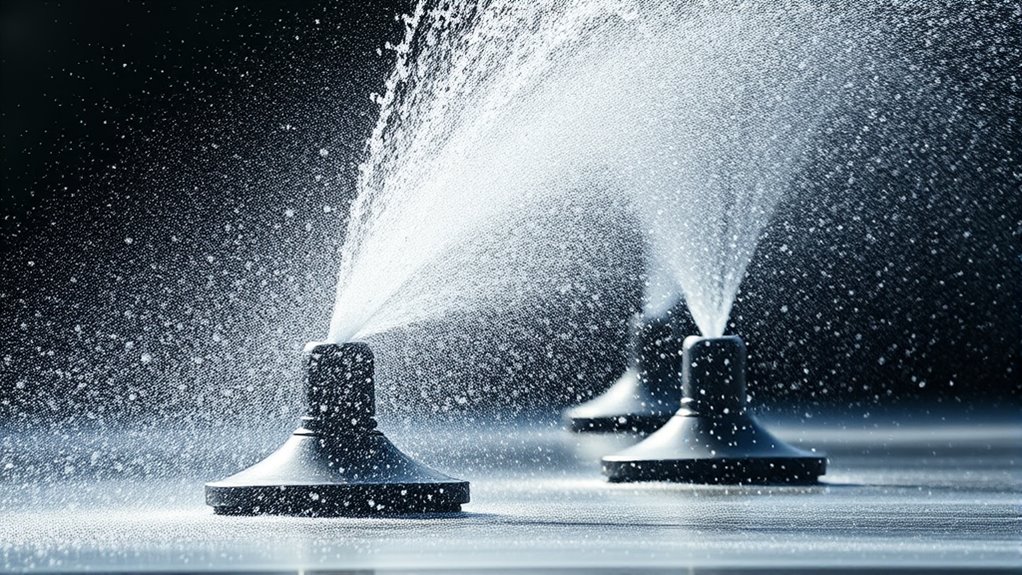
Have you ever wondered how wind, evaporation, and splash impact agricultural productivity and environmental management? These factors play a pivotal role in determining crop yields and resource efficiency. Wind can cause soil erosion, dry out plants, and increase evaporation rates, all of which threaten healthy crop development. To combat this, farmers often turn to aerodynamic modifications, which are structural adjustments designed to reduce wind speed around crops. For example, planting windbreaks or installing shelterbelts creates barriers that slow airflow, protecting plants from harsh gusts. These modifications not only minimize physical damage but also help retain soil moisture, reducing the need for excessive irrigation.
Windbreaks and shelterbelts protect crops by reducing wind speed and conserving soil moisture.
Speaking of irrigation, timing is essential when trying to manage water loss due to evaporation and splash. Proper irrigation timing ensures that water is supplied when crops need it most, rather than wasting it during peak evaporation periods. Early morning or late afternoon watering, for instance, reduces water loss caused by intense midday sun and high temperatures. Implementing precise irrigation schedules can markedly improve water use efficiency, especially in arid regions where water resources are limited. By aligning irrigation timing with weather forecasts and soil moisture levels, you can prevent over-irrigation, which often leads to splash erosion—a process where water droplets dislodge soil particles, degrading land quality and reducing productivity.
Splash control is another essential aspect of managing environmental impacts. When water hits the soil at high velocity, it causes splash erosion, which washes away topsoil and diminishes soil fertility over time. To mitigate this, you can use mulch covers or contour planting, both of which absorb or redirect the energy of falling water. Additionally, installing barriers or localized watering systems helps minimize the force of water hitting the ground, further reducing splash erosion. Incorporating aerodynamic modifications such as planting windbreaks can also help reduce wind speed and limit soil disturbance, creating a more stable environment for crop growth. Combining these practices with aerodynamic modifications, such as planting windbreaks, creates a thorough approach to controlling environmental factors that threaten sustainable farming.
Ultimately, understanding how wind, evaporation, and splash influence your agricultural environment enables you to adopt effective strategies. Aerodynamic modifications and optimized irrigation timing go hand in hand to protect soil health, conserve water, and boost crop yields. By actively managing these elements, you not only improve productivity but also promote environmental stewardship, ensuring your land remains fertile and sustainable for future generations.

Farm Wind-Breaks
As an affiliate, we earn on qualifying purchases.
As an affiliate, we earn on qualifying purchases.
Frequently Asked Questions
How Do Climate Changes Influence Wind and Evaporation Patterns?
Climate variability alters atmospheric dynamics, which directly impacts wind and evaporation patterns. You’ll notice stronger or more erratic winds as climate changes shift temperature and pressure systems. These changes also increase evaporation rates in some areas, leading to drier conditions, while other regions may experience more moisture. Overall, climate change causes unpredictable shifts in wind and evaporation behaviors, affecting ecosystems and water availability you depend on.
What Are the Latest Innovations in Splash Control Technology?
Imagine preventing water wastage and soil erosion with cutting-edge splash control tech. You’ll find innovations like advanced drip irrigation systems that minimize splashing and soil mulching techniques that keep moisture in place. These technologies work together to protect your land from runoff, conserve water, and boost crop health. By adopting these latest solutions, you can make a real difference—saving resources while nurturing a healthier environment.
Can Natural Barriers Effectively Reduce Wind Erosion?
Natural barriers can effectively reduce wind erosion by acting as windbreaks and promoting wind mitigation. When you plant trees, shrubs, or install other barriers, you disrupt airflow and decrease its force near the soil surface. This helps prevent soil loss and preserves moisture. By strategically designing these barriers, you can create a more stable environment, protect your land from wind damage, and improve overall soil health through natural wind mitigation techniques.
How Do Different Soil Types Respond to Evaporation Control Methods?
You’ll find that different soil types react uniquely to evaporation control methods. For example, sandy soils drain quickly and lose moisture fast, so organic mulching can be a game-changer by locking in soil moisture and preventing rapid evaporation. Clay soils retain moisture longer, making evaporation control less urgent but still beneficial. Using organic mulching helps maintain ideal soil moisture levels, ensuring your soil stays healthy and resilient against moisture loss.
What Economic Impacts Are Associated With Implementing Splash Control Measures?
Implementing splash control measures can impact your budget through implementation costs, but they often lead to savings over time. You should conduct a cost-benefit analysis to determine if the reduction in soil loss and improved crop yields justify these expenses. While initial costs may be high, the long-term economic benefits, such as decreased need for soil restoration and increased productivity, can outweigh the investment, making it a worthwhile decision.

2-in-1 Drip Irrigation Tubing Hole Punch & Fitting Insertion Tool Kit for Easier 1/4" Inch Fitting & Emitter Insertion Drip Sprinkler Systems (Blue)
2-In-1 Punch and Fitting Insert: The drip irrigation hole punch tool is designed to fit for drip tubing…
As an affiliate, we earn on qualifying purchases.
As an affiliate, we earn on qualifying purchases.
Conclusion
By understanding how wind, evaporation, and splash influence your processes, you can gently guide nature’s flow to your advantage. With a few thoughtful adjustments, you’ll create a more controlled environment that benefits your goals without harsh measures. Embrace these subtle techniques, and you’ll discover a smoother way to manage these natural forces. In doing so, you’ll foster a harmonious balance, turning potential challenges into opportunities for success.

Farm Plastic Supply – Erosion Control Blanket – Straw Garden and Landscape Cover, Erosion Control Blanket, Straw Blanket, Erosion Control, Mulch, Slope Stabilizer, and Seed Protector (8' x 112.5')
Soil Erosion: Prevents soil erosion from rainfall impact and stormwater sheet flow. Our Erosion Control Blankets retain moisture…
As an affiliate, we earn on qualifying purchases.
As an affiliate, we earn on qualifying purchases.

Thin Seedling Starter Seedling Transplanting Pliers Gardening Planting Tool Supplies for Plant Lowering Root Plant Handling Tool
These stainless steel gardening tools store easily without occupying space Allows carrying to greenhouses, balconies, or backyard plots…
As an affiliate, we earn on qualifying purchases.
As an affiliate, we earn on qualifying purchases.