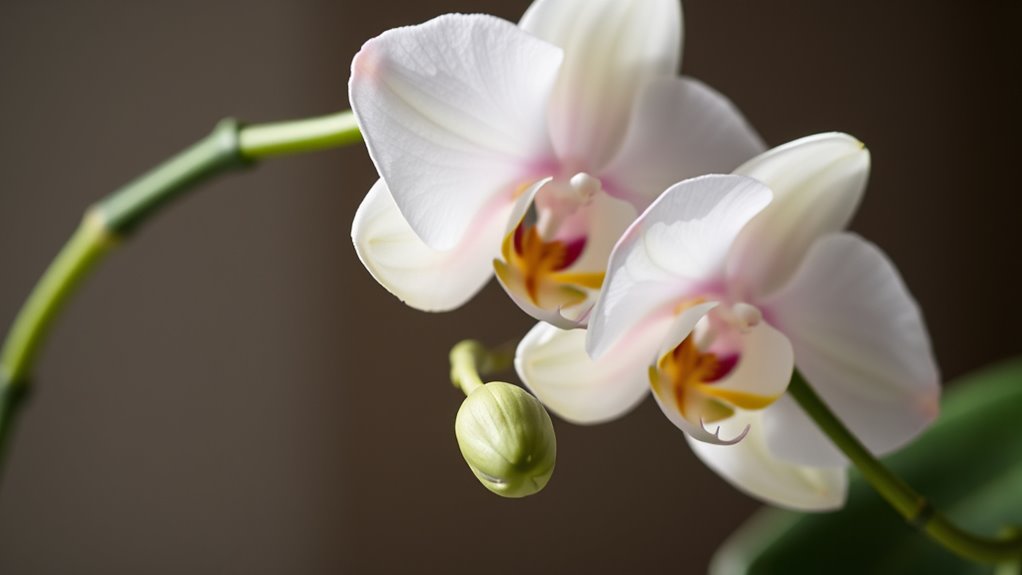

After your Phalaenopsis finishes blooming, focus on repotting if needed, using fresh orchid mix and trimming any dead roots to promote healthy growth. Water deeply once a week, ensuring the medium feels dry about an inch below the surface, and avoid overwatering. Place your orchid in a warm, well-lit spot away from direct sunlight and drafts. Maintaining these care routines will help your orchid recover and set the stage for future blooms—more tips are ahead to support your plant’s health.

Get garden gear delivered free with Prime
- Fast, free delivery on millions of items
- Prime Video, Amazon Music and more included
- Member-only deals all year
Key Takeaways
- Water deeply once a week, ensuring the potting medium feels dry about an inch below the surface.
- Repot every 1-2 years with fresh orchid mix and proper drainage to encourage healthy roots.
- Place in a well-lit, warm spot away from direct sunlight and temperature fluctuations.
- Maintain moderate humidity and avoid overwatering to prevent root rot.
- Monitor for new leaf or root growth as signs of recovery and readiness for next blooming cycle.
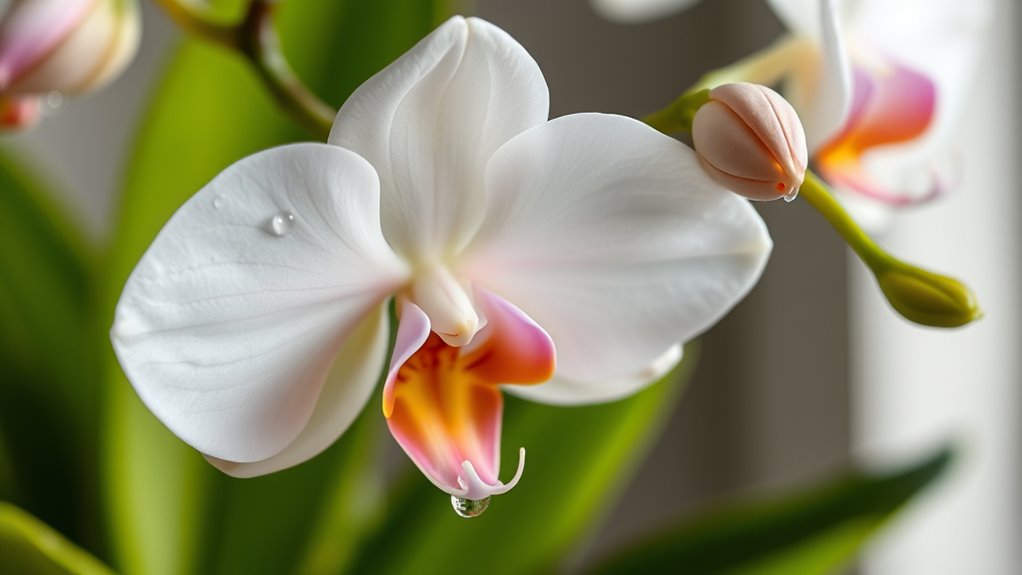
After your orchid blooms, proper care is essential to guarantee it blooms again. The period following a bloom is critical for maintaining your Phalaenopsis’s health and encouraging future flowering. One of the most important aspects during this time is understanding the right watering techniques. Instead of frequent, shallow watering, you should aim to water deeply but infrequently. Typically, watering once a week is sufficient, but always check the potting medium first—if it feels dry about an inch below the surface, it’s time to water. When you do, pour water slowly until it drains from the bottom of the pot, ensuring thorough hydration. Avoid letting your orchid sit in standing water, as this can lead to root rot. Using room temperature water is best, and if possible, watering in the morning helps prevent excess moisture from lingering overnight, which can foster disease.
Alongside proper watering, repotting tips play a key role in your orchid’s ongoing vitality. After flowering, it’s often recommended to repot your Phalaenopsis if the potting medium has broken down or if the roots are crowded. Typically, repotting every one to two years keeps the roots healthy and prevents pests or diseases. When repotting, choose a pot with good drainage and fresh orchid-specific potting mix. Carefully remove the plant from its current container, gently loosen the roots, and trim any that are brown or rotted with sterile scissors. Position the orchid in the new pot, spreading the roots evenly, and fill with fresh mix, ensuring the base of the plant sits just above the pot’s rim. This process not only refreshes the growing environment but also encourages new root growth and better overall health.
In the weeks following bloom, it’s also wise to keep the plant in a well-lit, warm spot but away from direct sunlight, which can scorch the leaves. Maintain moderate humidity and avoid sudden temperature changes. As the plant recovers, you might notice new leaf or root growth, signaling that your care routine is working. Be patient; with consistent watering techniques and proper repotting, your orchid will develop the strength needed for its next flowering cycle. Remember that maintaining a balance—neither overwatering nor letting the medium dry out completely—is key. Providing the right environment and nurturing your orchid carefully after bloom will reward you with vibrant flowers again in the future.
Phalaenopsis orchid repotting mix
As an affiliate, we earn on qualifying purchases.
As an affiliate, we earn on qualifying purchases.
Frequently Asked Questions
When Should I Repot My Phalaenopsis Orchid After Blooming?
You should repot your Phalaenopsis orchid when the flowering is finished and new roots start to grow, typically every 1-2 years. The best repotting timing is in spring or early summer. Choose an orchid pot size that’s just slightly bigger than your current one to prevent overwatering. Repotting at the right time guarantees your orchid’s roots have space to grow and stay healthy, promoting better blooms in the future.
How Can I Encourage My Orchid to Rebloom?
To encourage your orchid to rebloom, you should follow a consistent fertilizer schedule with a balanced, diluted fertilizer every couple of weeks. Gently adjust the light levels to provide bright, indirect sunlight, which signals the plant to rest and then rebloom. Patience is key; with proper care, including proper watering and avoiding drafts, your orchid will reward you with beautiful new blooms when the time is right.
What’s the Best Temperature Range for Orchid Recovery?
You should aim for temperature guidelines of 65-75°F during the day and slightly cooler at night for orchid recovery. This range helps your orchid enter orchid dormancy, which is essential for reblooming. Avoid sudden temperature drops or drafts, as they can stress the plant. Consistent, comfortable temperatures support healthy growth and recovery, ensuring your orchid stays strong and ready to bloom again when conditions are right.
Should I Prune the Flower Spike After Blooming?
A stitch in time saves nine—so, yes, you should prune the flower spike after blooming. Once the flowers fade, you can perform flower spike pruning or orchid spike removal, depending on the condition of the spike. If it’s brown and dead, cut it back near the base. If it’s still green, you might wait to see if it reblooms, but generally, pruning helps the plant conserve energy for new growth.
How Often Should I Water My Orchid During Recovery?
You should water your orchid when the moisture levels in the potting mix drop to about 50%. During recovery, establish a watering schedule of once a week, but always check the moisture levels first. Avoid overwatering, as it can lead to root rot. Keep the potting medium lightly moist, not soggy, and make certain proper drainage to help your orchid recover healthily and promote new growth.
Conclusion
Think of your orchid as a promise waiting to be fulfilled. After it blooms, nurture its potential—prune, water, and provide patience. Like a gentle sunrise, your care can awaken new life and hope in the plant. Remember, every ending holds the seed of new beginnings. With love and attention, you’re not just caring for a flower—you’re cultivating a symbol of renewal, waiting quietly for its next beautiful chapter to unfold.
Fall yard work Picks
leaf blowers
As an affiliate, we earn on qualifying purchases.