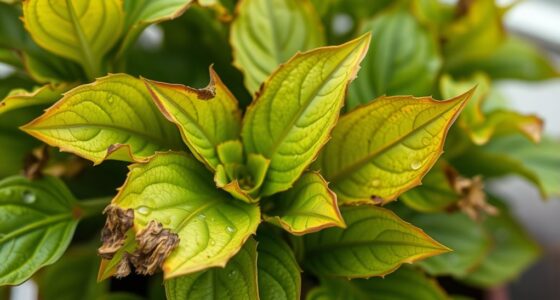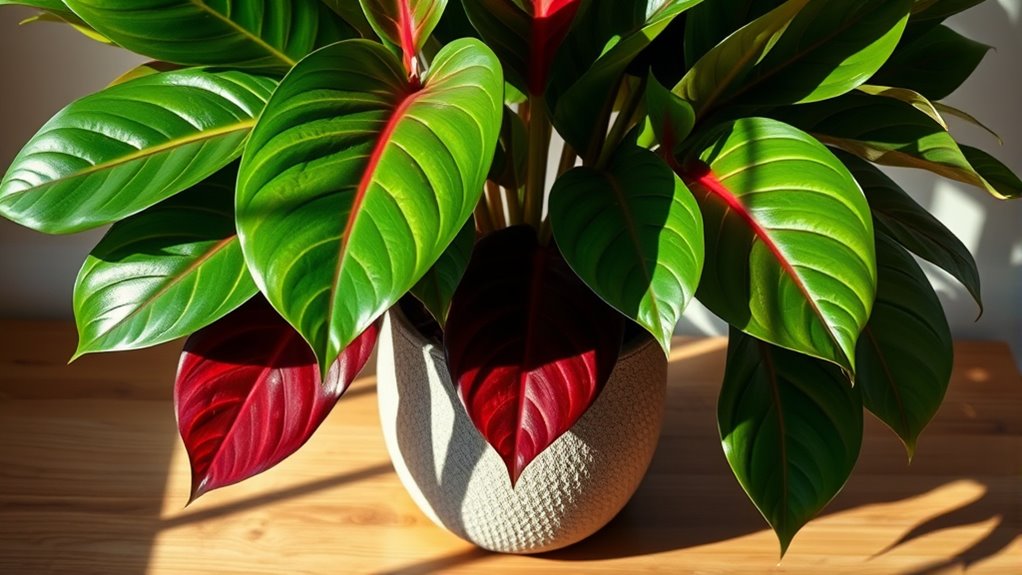

To care for your Ficus elastica, make certain it’s in well-draining soil with proper watering—wait until the top inch feels dry before watering again. Provide bright, indirect light to promote lush growth, and prune regularly to shape and encourage fullness. Proper pruning and soil help manage its size and health, especially in limited spaces. Keep an eye on your plant’s needs, and discover more tips on maintaining its vibrant look as you continue your journey with this beautiful rubber plant.

Get garden gear delivered free with Prime
- Fast, free delivery on millions of items
- Prime Video, Amazon Music and more included
- Member-only deals all year
Key Takeaways
- Ensure well-draining soil and water only when the top inch dries to prevent root rot.
- Provide bright, indirect light for optimal growth and vibrant foliage.
- Prune regularly to shape the plant, remove dead leaves, and promote bushy growth.
- Manage plant size by trimming leggy stems, avoiding removal of over one-third of the plant at once.
- After pruning, maintain consistent watering and lighting to support healthy recovery.
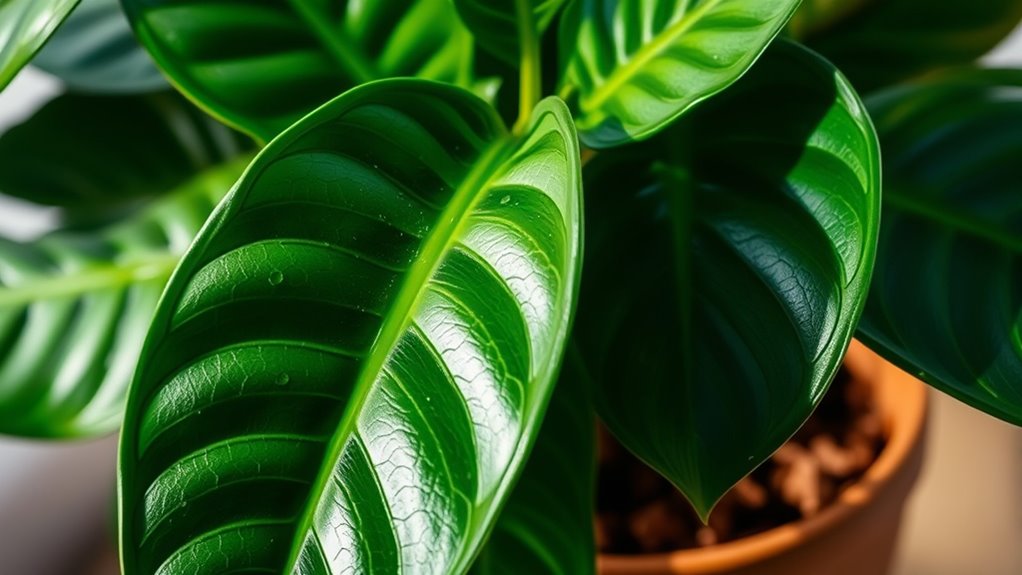
Caring for a rubber plant is straightforward when you understand its basic needs. One of the most important aspects of plant health is ensuring proper soil drainage. Rubber plants dislike sitting in water, so it’s essential to choose a pot with drainage holes and use a well-draining soil mix. A good combination includes peat, perlite, or coarse sand mixed with standard potting soil. This setup prevents water from lingering around the roots, which can cause root rot and other issues. When watering, wait until the top inch of soil feels dry before giving your plant another drink. Overwatering is a common mistake, so always check moisture levels before watering again. Additionally, providing the right light conditions can significantly influence your plant’s growth and overall health.
In addition to soil considerations, pruning techniques play a significant role in maintaining a healthy, attractive rubber plant. Regular pruning encourages lush, bushy growth and keeps the plant from becoming too tall or leggy. When pruning, use clean, sharp scissors or pruning shears to make precise cuts. Focus on removing dead or yellowing leaves, which can drain energy from the plant and reduce its overall vibrancy. You can also prune to shape the plant or control its size. Cutting back leggy stems encourages new growth from the base, resulting in a fuller appearance. Always prune just above a leaf node or a set of healthy leaves to promote vigorous regrowth.
Furthermore, pruning can help manage the size of your rubber plant, especially if space is limited. During the growing season, you might want to prune more frequently to keep the plant manageable. Remember that rubber plants respond well to pruning, and trimming them regularly can improve air circulation and sunlight penetration, both essential for health. As you prune, be mindful of not removing more than a third of the plant at once, which could stress it. After pruning, give your plant some time to recover, and ensure it receives proper watering and light to promote quick healing.
Rubber Plant Pot with Drainage Holes
As an affiliate, we earn on qualifying purchases.
As an affiliate, we earn on qualifying purchases.
Frequently Asked Questions
How Often Should I Rotate My Rubber Plant for Even Growth?
You should rotate your rubber plant about once a week to promote growth consistency. By regularly turning the plant, you prevent it from leaning toward the light and ensure all sides receive equal exposure. This simple plant rotation helps maintain balanced growth and keeps your Ficus Elastica healthy. Keep an eye on its development, and adjust the rotation frequency if you notice uneven growth or leaning.
Can I Prune My Ficus Elastica to Control Its Size?
Yes, you can prune your Ficus elastica to control its size. Use proper pruning techniques like trimming back leggy growth and removing any dead or damaged leaves. Make clean cuts just above a leaf node to encourage bushier growth and maintain your plant’s shape. Regular pruning helps with growth control, keeps your rubber plant healthy, and prevents it from becoming too large for your space.
What Are Common Pests That Affect Rubber Plants Indoors?
Coincidentally, pests like spider mites, mealybugs, and scale insects often target rubber plants indoors. For pest identification, check leaves and stems regularly. If you spot these pests, natural remedies such as neem oil or insecticidal soap can be effective. Promptly addressing infestations keeps your Ficus elastica healthy and prevents pests from spreading. Regular inspection and early treatment are key to maintaining your plant’s beauty and robustness.
How Do I Prevent Leaf Drop During Winter Months?
To prevent leaf drop during winter, you should focus on leaf drop prevention by maintaining consistent humidity and avoiding sudden temperature changes. Make sure you’re practicing proper winter watering—water only when the top inch of soil feels dry. Keep your rubber plant away from cold drafts and direct heating sources. These steps help your Ficus Elastica stay healthy, reducing stress and keeping leaves lush throughout winter.
Is It Safe to Keep a Rubber Plant Around Pets?
You should keep your rubber plant away from pets because of toxicity concerns. The plant contains latex that can cause irritation and more serious health issues if ingested by cats or dogs. For pet safety, consider placing it in a high, inaccessible spot or using barriers. Always monitor your pets around houseplants, and if you suspect ingestion, contact your veterinarian immediately to guarantee their safety.
Conclusion
With a little attention, your rubber plant will thrive, its glossy leaves shining like emeralds in the sunlight. As you water and care for it, watch its sturdy branches grow taller, filling your space with lush greenery. Imagine your home transformed into a vibrant oasis, where every leaf whispers life and energy. Keep nurturing your ficus elastica with patience and love, and you’ll enjoy its striking beauty for years to come, a living proof of your care.
Fall yard work Picks
leaf blowers
As an affiliate, we earn on qualifying purchases.