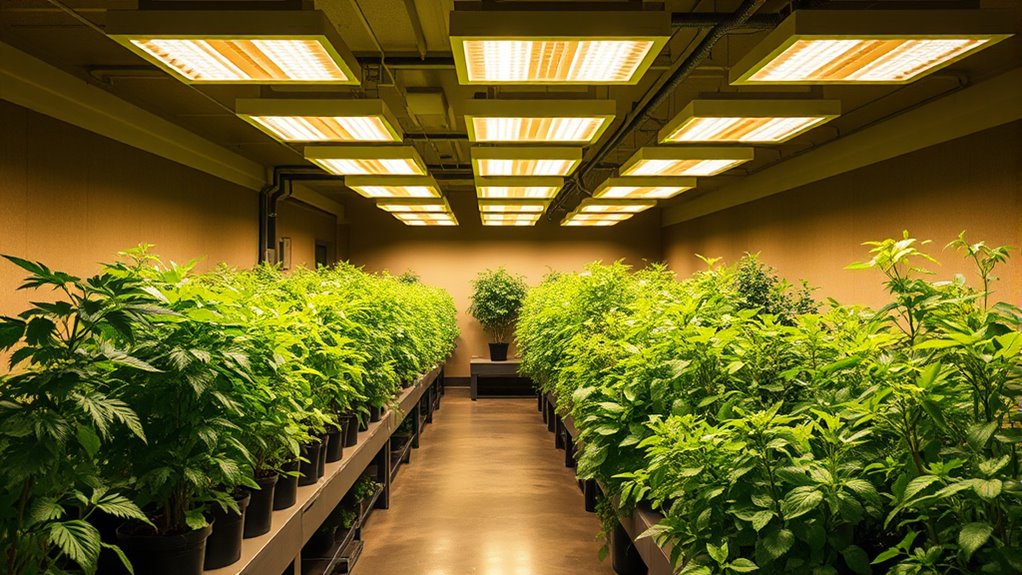

In a basement, natural sunlight is limited, so using grow lights is key for healthy plant growth. Choose full spectrum LED lights that mimic natural sunlight, and position them 12 to 24 inches above your plants. Adjust the height based on plant response, ensuring even coverage to prevent uneven growth. Proper spectrum and placement help your plants thrive. Keep experimenting with your setup, and you’ll discover how to optimize your indoor garden’s success.
Key Takeaways
- Use full spectrum LED grow lights to mimic natural sunlight for healthy plant development indoors.
- Position lights 12-24 inches above plants, adjusting based on plant response and growth stage.
- Ensure even light coverage across all plants to promote uniform growth and prevent uneven development.
- Select appropriate spectra: blue for vegetative growth and red for flowering and fruiting stages.
- Regularly monitor plant health and adjust light placement and intensity to optimize growth conditions.
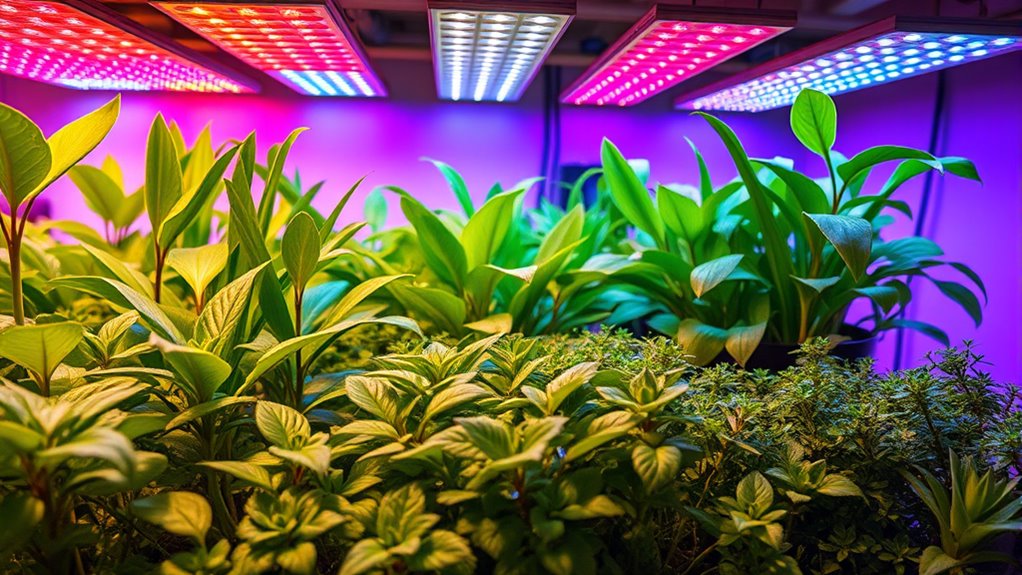
Growing plants indoors can be challenging, especially when natural sunlight isn’t enough. That’s where grow lights come into play, providing the essential light your plants need to thrive. When choosing grow lights, understanding the LED spectrum is vital. Different LED spectra emit specific wavelengths of light, and for healthy plant growth, you want a full spectrum that mimics natural sunlight as closely as possible. A balanced LED spectrum with both blue and red wavelengths supports vegetative growth and flowering stages. Blue light encourages lush, compact foliage, while red light promotes flowering and fruit production. By selecting the right spectrum, you maximize your plants’ potential and guarantee healthy development.
Light placement is equally important. Proper light positioning allows your plants to get the maximum benefit from your grow lights without risking damage. You should position your LED grow lights at an appropriate height above your plants—usually between 12 to 24 inches, depending on the light’s intensity and the plant’s growth stage. If the light is too close, it can cause leaf burn or stress, but if it’s too far away, plants won’t receive enough energy to grow properly. Keep an eye on how your plants respond; if they start stretching toward the light, it’s a sign they need to be closer. Conversely, if their leaves turn yellow or curl, you might need to move the lights further away. Adjusting light placement based on your plants’ response helps create an ideal environment. Additionally, understanding the importance of light spectrum is essential for optimizing plant health and growth.
Another tip for effective light placement involves guaranteeing even coverage. Avoid placing the lights directly over just one part of the plant; instead, position them to cover the entire area uniformly. Using adjustable mounts or hanging systems makes this easier, so you can fine-tune the height and angle as your plants grow. Consistent light distribution prevents uneven growth and helps your plants develop a strong, healthy structure. Remember that different plants have varied light requirements, so adapting your light placement as your plants grow and change is key to success.

Aokrean Grow Lights for Indoor Plants, Full Spectrum Plant Light with Base
- Stable Stand Design: Requires pot to press for stability
- Easy Installation: Insert in soil or use stand
- Multiple Lighting Modes: White, warm white, red, and mix
As an affiliate, we earn on qualifying purchases.
As an affiliate, we earn on qualifying purchases.
Frequently Asked Questions
Can Grow Lights Replace Natural Sunlight Entirely?
You might wonder if artificial light can fully replace natural sunlight. While grow lights provide essential light for plant health, they can’t perfectly mimic the full spectrum of sunlight. Grow lights are great for supplementing or extending growing seasons, but for ideal plant health, natural sunlight is still preferred. You can rely on artificial light, but complete replacement isn’t perfect, as it may limit some benefits of natural sunlight.
How Do I Choose the Right Grow Light Spectrum?
When choosing the right grow light spectrum, you should consider light color and spectrum adjustment. Look for lights that offer a full spectrum or adjustable spectrum options, so you can tailor the light to your plants’ needs at different growth stages. A balanced spectrum with blue and red light promotes healthy growth, while adjustable spectrum allows you to optimize light color for flowering or vegetative stages, ensuring your plants thrive indoors.
What’S the Average Lifespan of Typical Grow Lights?
You might wonder about the lifespan of typical grow lights. Usually, they last between 10,000 to 25,000 hours of use, depending on the type. Light durability varies, and you’ll need to take into account bulb replacement when the light dims or color shifts. LED grow lights tend to last longer and maintain efficiency better than fluorescent or HID bulbs. Regularly monitor your lights to guarantee ideal plant growth.
Do Different Plants Require Different Grow Light Intensities?
You should know that different plants do necessitate different light intensities based on their specific plant requirements. Some plants thrive with high light intensity, while others prefer lower levels. To guarantee healthy growth, you need to adjust your grow lights accordingly, providing the right amount of light for each plant’s needs. Paying attention to their growth response helps you optimize light intensity and promote vibrant, healthy plants.
Are There Energy-Efficient Options for Indoor Grow Lights?
You’re wondering if there are energy-efficient options for indoor grow lights. You can choose LED lights, known for their high efficiency and low energy consumption, which save you money over time. Additionally, energy-saving bulbs like compact fluorescents can work well. By selecting these options, you reduce your energy use while providing your plants with the light they need to thrive. These choices make indoor gardening more sustainable and cost-effective.
Conclusion
By incorporating grow lights into your basement gardening, you can enjoy fresh herbs and vegetables year-round. Did you know that LED grow lights can increase plant growth rates by up to 25% compared to natural light? This means healthier, faster-growing plants right in your own home. So, don’t hesitate to experiment with different setups—your indoor garden will thrive, and you’ll enjoy the rewarding experience of gardening anytime, regardless of outside conditions.