
City composting programs are making a real difference by transforming organic waste into valuable soil and cutting landfill use. You can participate through curbside bins, workshops, or community drop-offs, making composting easier and more accessible. These initiatives not only reduce greenhouse gases but also build healthier neighborhoods and stronger communities. By embracing these success stories, you’ll see how collective effort turns waste into resource, and there’s much more to discover about this inspiring movement.
Key Takeaways
- Cities worldwide are showcasing successful composting programs as models for sustainable urban waste management.
- Community engagement and education are crucial for increasing participation and program effectiveness.
- Innovative incentives like discounts and free compost bins motivate residents to participate actively.
- Composting initiatives significantly reduce landfill waste, methane emissions, and the city’s carbon footprint.
- Sharing success stories highlights tangible environmental benefits and encourages broader adoption of composting practices.
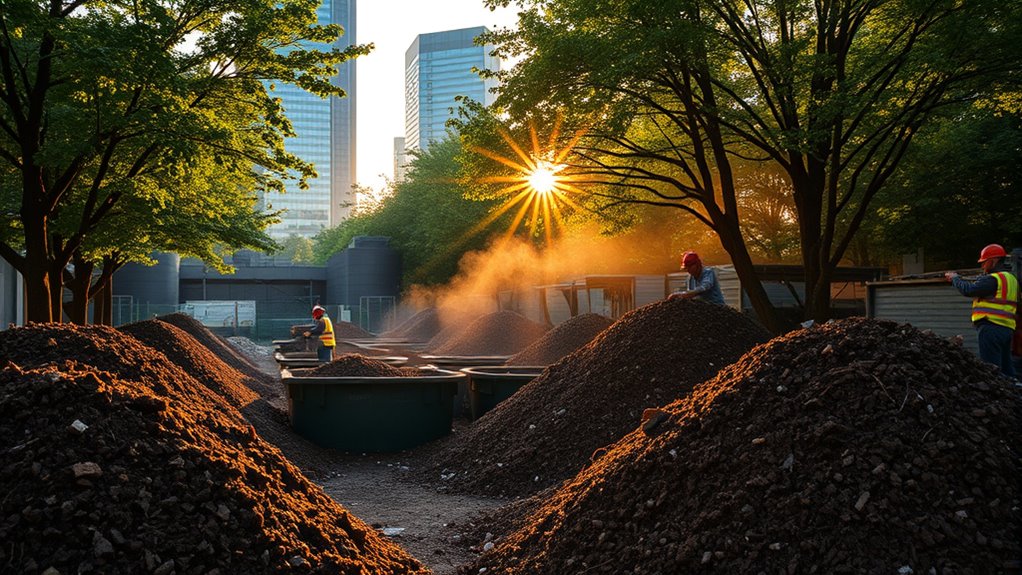
Many cities have transformed waste management by embracing composting programs, turning organic trash into valuable soil amendments. These urban initiatives often serve as a catalyst for broader waste reduction efforts, showing residents that composting isn’t just an environmental choice but a practical one too. When you participate in city-led composting efforts, you’re part of a movement that reduces the amount of waste sent to landfills, cutting down on methane emissions and decreasing the city’s overall carbon footprint. These programs often begin with community outreach and education, helping you understand how composting can fit seamlessly into your daily routine. You might receive curbside bins, participate in composting workshops, or find local drop-off sites, making it easier than ever to be part of the solution.
Cities that prioritize waste reduction through composting recognize that organic waste accounts for a significant portion of municipal trash. Instead of letting food scraps and yard waste sit in landfills, these initiatives give you a chance to divert waste that would otherwise generate harmful greenhouse gases. When you sort your compostables correctly, you contribute directly to urban sustainability goals. The impact is tangible: less waste in landfills, cleaner neighborhoods, and healthier soils. Many cities also partner with local businesses and organizations to expand composting access, making it more convenient for you to participate regardless of where you live or work.
These urban initiatives often come with incentives that motivate you to get involved. Some cities offer discounts on waste collection fees or provide free compost bins, making it more affordable to participate. Others run community composting projects where you can donate your organic waste and even learn about compost management firsthand. By adopting these practices, you help reduce the volume of waste that must be processed or landfilled, easing the burden on city infrastructure. Such programs also foster a sense of community, encouraging neighbors to share tips and experiences, making composting an engaging and collective effort.
Engaging with city composting programs also helps you become more mindful of your waste habits. You start to see food scraps and yard waste not as trash but as resources that can be transformed into rich, nourishing soil. This shift in perspective supports waste reduction on a personal level, aligning your daily habits with the city’s sustainability goals. Additionally, incorporating educational initiatives into these programs can improve your understanding of composting practices and the importance of sustainable waste management. As more residents participate, the cumulative effect is significant, demonstrating that urban initiatives centered around composting can lead to cleaner, greener cities. Your involvement is a crucial part of this success story, proving that small actions can contribute to large-scale environmental change.
compost bins for city apartments
As an affiliate, we earn on qualifying purchases.
As an affiliate, we earn on qualifying purchases.
Frequently Asked Questions
How Do City Composting Programs Impact Local Wildlife?
City composting programs positively impact urban wildlife and ecosystem health by reducing waste and promoting sustainable habitats. When you participate, you help create healthier environments, attracting beneficial insects and animals that support biodiversity. Proper composting minimizes pollution and prevents harmful runoff, protecting local ecosystems. By supporting these programs, you contribute to a balanced urban ecosystem, fostering a thriving environment where wildlife can flourish and ecosystem health improves for everyone.
What Are the Costs Associated With Implementing City-Wide Composting?
You might find it surprising, but the costs of city-wide composting hinge on a thorough cost analysis and careful budget allocation. Implementing such programs involves expenses like collection infrastructure, composting facilities, and public education. While initial investments can be high, long-term benefits often offset costs. Your city’s unique needs and scale influence overall expenses, making strategic planning essential to guarantee sustainable, cost-effective composting initiatives.
How Do Cities Educate Residents About Composting Practices?
You can effectively educate residents about composting practices through targeted public outreach and educational campaigns. Use flyers, social media, workshops, and school programs to spread awareness and provide clear instructions. Engaging community leaders and offering hands-on demonstrations make the message more relatable. Consistent messaging and feedback opportunities help residents feel confident and motivated to participate, ultimately ensuring the success of city-wide composting initiatives.
What Challenges Do Cities Face in Maintaining Composting Facilities?
You might face challenges like maintaining composting facilities, similar to a city struggling with aging infrastructure. Municipal funding often falls short, making infrastructure development difficult. For instance, limited budgets can delay upgrades or repairs, reducing efficiency. You need consistent funding to sustain operations and expand capacity. Overcoming these obstacles requires strategic planning, community support, and innovative solutions to keep facilities running smoothly and meet growing composting demands.
How Is Compost Quality Monitored and Regulated in Urban Areas?
You ensure compost quality in urban areas by regularly conducting soil testing to check for contaminants and nutrient levels. You also follow regulation standards set by local authorities, which often include specific guidelines for compost maturity, pathogen reduction, and pollutant limits. By adhering to these standards and performing routine testing, you help guarantee that the compost is safe, high-quality, and suitable for urban agriculture or landscaping projects.
Conclusion
So, next time you pitch a fit about yard waste or banana peels, remember these city heroes turning trash into treasure. They’ve shown that composting isn’t just for hipsters with fancy worm farms—it’s a city-wide revolution. With a little effort, you can join the ranks of eco-warriors transforming your garbage into gold. Who knew that the secret to saving the planet was hiding in your backyard? Spoiler alert: It’s compost, and it’s pretty awesome.