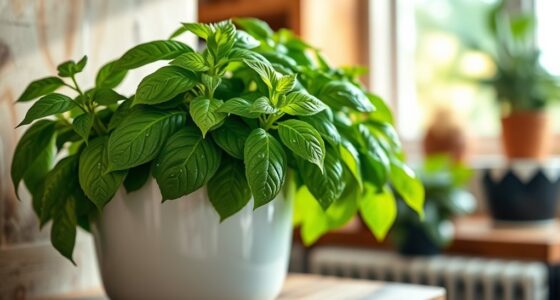
Growing basil indoors lets you enjoy fresh, fragrant leaves all year while giving you control over sunlight, water, and warmth. Place it near a south-facing window or use grow lights, and keep the soil moist with good drainage. Regular pruning encourages healthy, bushy growth, and proper spacing helps prevent pests. If you’re enthusiastic to learn tips on maintaining healthy basil and maximizing flavor, continue exploring to grow a thriving indoor herb garden.
Key Takeaways
- Growing basil indoors ensures fresh flavor year-round and allows control over sunlight, water, and warmth.
- Place basil near south-facing windows or grow lights for at least six hours of sunlight daily.
- Maintain moist, well-draining soil and regularly prune to promote bushy, healthy growth.
- Companion plant basil with tomatoes and herbs like oregano to enhance flavor and deter pests.
- Monitor for pests like aphids and spider mites; good airflow and proper care prevent common diseases.
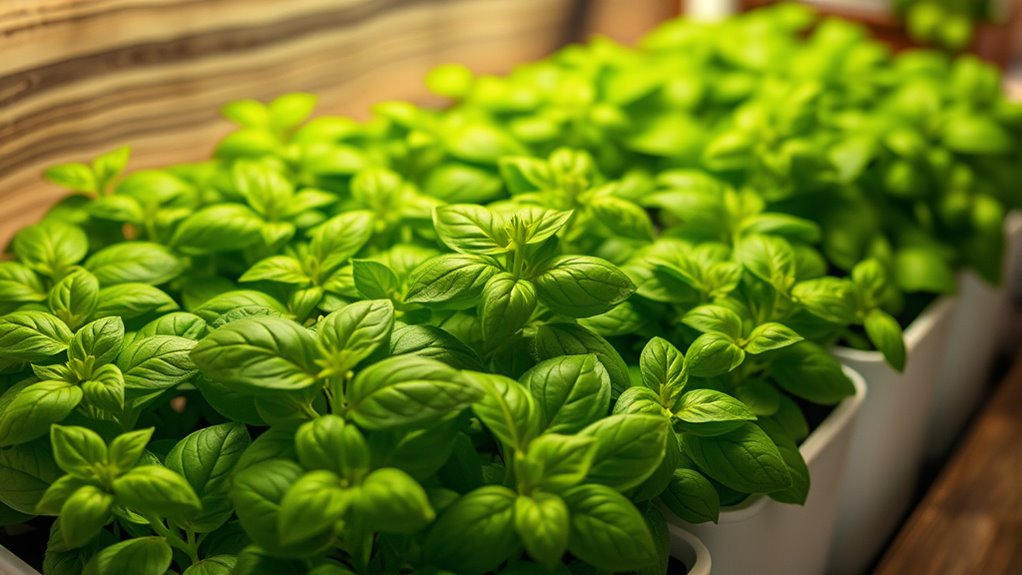
Herb gardens are a delightful addition to any outdoor space, offering fresh flavors and aromatic scents right at your fingertips. Growing basil indoors is a fantastic way to enjoy its vibrant aroma and versatile culinary uses year-round. When you bring basil inside, you can control its environment, ensuring it gets the right amount of sunlight, water, and warmth. This keeps your herb thriving and ready to enhance your dishes whenever you need it.
Growing basil indoors ensures fresh flavor and aroma year-round with controlled sunlight, water, and warmth.
One of the key advantages of growing basil indoors is how well it pairs with other plants through companion planting. Basil is a natural partner for many herbs and vegetables, especially tomatoes, peppers, and oregano. Together, they not only create a fragrant, colorful arrangement but also support each other’s growth. For example, basil can help improve the flavor of nearby tomatoes and may even enhance their resistance to certain pests. Additionally, basil’s presence can deter unwanted insects, making it a helpful tool in pest control. Its strong scent confuses pests like aphids and whiteflies, reducing the need for chemical interventions. When you cultivate basil with other plants, you’re effectively creating a mini ecosystem that promotes healthy growth and reduces pest problems.
Growing basil indoors requires some attention to detail. Place your basil near a south-facing window or provide supplemental grow lights to ensure it receives ample light—about six hours daily. Keep the soil moist but not waterlogged, and use pots with good drainage to prevent root rot. Regular pruning encourages bushier growth, and harvesting leaves frequently prevents the plant from becoming leggy. As you tend to your indoor basil, you’ll notice how its aroma fills your space, making it even more appealing to grow.
Indoor basil also benefits from good airflow, which helps prevent fungal diseases and pests. You can achieve this by spacing your plants properly and avoiding overcrowding. Keep an eye out for common pests like aphids or spider mites, especially if you notice any discoloration or webbing. Maintaining healthy plants through proper watering, sunlight, and good airflow reduces the likelihood of pest infestation and minimizes the need for chemical pest control methods.
Top picks for "herb garden spotlight"
Open Amazon search results for this keyword.
As an affiliate, we earn on qualifying purchases.
Frequently Asked Questions
How Often Should I Water My Indoor Basil Plant?
You should water your indoor basil plant when the soil moisture feels dry about an inch below the surface. Typically, this means watering every 2-3 days, but it can vary based on your home’s humidity and temperature. Keep an eye on the soil, and avoid overwatering, which can cause root rot. Consistent watering frequency helps your basil stay healthy and vibrant, ensuring it thrives indoors.
What Is the Ideal Humidity Level for Basil Indoors?
Did you know basil thrives best at 50-60% humidity? You should aim for this level to keep your plant healthy. Maintaining proper soil moisture depends on this humidity, as it helps prevent the soil from drying out too quickly. Adequate light requirements also influence humidity, so place your basil where it gets plenty of indirect sunlight. Keep humidity steady to promote lush, aromatic growth and healthy leaves.
Can Basil Be Propagated From Cuttings?
Yes, you can propagate basil from cuttings easily. Just take a healthy stem with leaves, remove the lower leaves, and place it in water. Keep an eye on basil pest control during this process, as pests can hinder root development. Regular basil plant pruning encourages bushier growth, making your cuttings more successful. Once roots develop, transplant them into soil and enjoy fresh basil all year round.
How Do I Prevent Pests on My Indoor Basil?
To prevent pests on your indoor basil, start by choosing pest-resistant varieties if possible. Keep your basil healthy with proper watering and good airflow, which naturally deters pests. Use natural insect deterrents like neem oil or insecticidal soap when needed, and regularly inspect your plants for signs of pests. Keeping your basil clean and isolated from other infested plants also helps prevent pest problems from spreading.
What Are Common Signs of Basil Plant Deficiencies?
You might notice your basil shows nutrient deficiencies through yellowing leaves, stunted growth, or pale coloration, which differ from pest symptoms like holes or sticky residue. Keep an eye out for these signs to catch issues early. When you see these symptoms, it’s essential to adjust your fertilization routine and make certain of proper watering. Addressing nutrient deficiencies promptly helps your basil stay healthy and vibrant, avoiding further problems.
Conclusion
Now that you’ve brought basil indoors, you might think you’ve mastered herb gardening. But don’t be surprised if your kitchen turns into a mini jungle, and your basil starts competing for space with your other plants. Ironically, the very convenience of growing fresh herbs inside can lead to a wild, unruly herb empire—so enjoy the chaos, and remember, even the best gardeners can’t control everything. Happy growing!