Plantting a garlic border around your garden creates a natural barrier that keeps pests like aphids, beetles, and rabbits away. Its pungent aroma acts like a living shield, disrupting pests’ ability to find your vegetables such as tomatoes, peppers, and lettuce. Plus, garlic requires minimal effort and aligns with eco-friendly gardening. To discover how to set up your garlic border effectively and maximize pest protection, keep exploring these helpful tips.
Key Takeaways
- Plant garlic along garden edges to create a natural pest-repelling barrier.
- The pungent aroma deters insects like aphids, beetles, and rabbits effectively.
- Garlic borders support organic gardening by reducing the need for chemical pesticides.
- Proper planting and spacing ensure healthy garlic growth and optimal pest protection.
- Garlic borders enhance garden biodiversity and provide additional harvest opportunities.
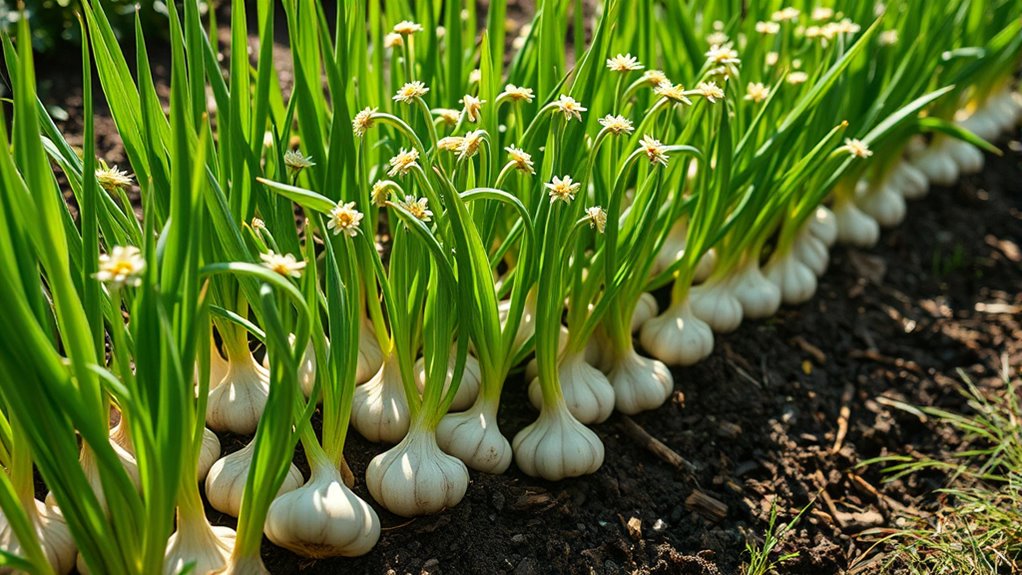
Have you ever heard of the Garlic Border? If not, you’re missing out on a simple yet effective way to protect your garden. The Garlic Border is a row of garlic planted along the edge of your garden beds, creating a natural barrier against pests. This technique isn’t just about adding flavor to your meals—it’s a smart strategy for pest deterrent and companion planting. By planting garlic along the borders, you harness its pungent scent to keep unwanted visitors at bay, reducing the need for chemical pesticides.
Plant a garlic border to naturally repel pests and protect your garden effortlessly.
When you set up a Garlic Border, you’re fundamentally using garlic as a living shield. Pests such as aphids, beetles, and even rabbits tend to avoid garlic’s strong aroma. This makes it an ideal companion planting choice, as it not only deters pests but can also benefit neighboring plants. For example, garlic can help protect vegetables like tomatoes, peppers, and lettuce from common garden pests. Its pungency disrupts pests’ ability to locate their preferred host plants, giving your garden a natural line of defense. Plus, garlic’s inclusion in your border adds a layer of biodiversity, which can contribute to overall garden health.
Planting garlic along the border is straightforward. You can start by planting garlic cloves in well-drained soil in the late fall or early spring, depending on your climate. Space the cloves about 4 to 6 inches apart to allow room for growth and airflow. As the garlic matures, its strong smell intensifies, creating an effective pest deterrent that discourages insects from settling in your garden. The border not only acts as a barrier but also allows you to harvest garlic later in the season, making it a functional addition rather than just a pest control measure.
Furthermore, the use of garlic in your garden aligns with organic gardening principles. It’s a natural, eco-friendly way to reduce pest problems without harming beneficial insects or pollinators. You might even notice fewer aphids and other pests on your plants over time as the garlic’s scent becomes a constant presence. Over the growing season, this method can lead to healthier plants and a more sustainable garden environment. Plus, since garlic is easy to grow and maintain, setting up a Garlic Border becomes an economical, low-effort tactic that pays off in pest control and crop protection. Additionally, beneficial ingredients like hyaluronic acid in some garlic-based solutions can further enhance plant health.

Garlic Bulb (8 Pack), Fresh California SOFTNECK Garlic Bulb for Planting and Growing Your OWN Garlic
- Organic and Heirloom Garlic: Great tasting and healthy
- Easy to Grow and Harvest: From bulb to harvest
- High Yield Producer: Multiple bulbs per plant
As an affiliate, we earn on qualifying purchases.
As an affiliate, we earn on qualifying purchases.
Frequently Asked Questions
Can Garlic Borders Repel Pests Other Than Insects?
You might wonder if garlic borders repel pests beyond insects. While they’re mainly known as herbaceous deterrents for insects, some pest repellent plants, like garlic, can also deter larger pests such as rabbits and deer. The pungent smell acts as a natural barrier, making your garden less attractive to these animals. However, garlic borders work best for insects, and you may need additional measures for larger pests.
How Long Does It Take for Garlic to Establish in a Border?
You can expect garlic to establish in your border within about 4 to 6 weeks after planting. To guarantee quick establishment, prepare the soil well by loosening it and adding compost. Plant cloves about 2 inches deep, with the pointed end up. Proper soil preparation and correct planting depth help garlic develop strong roots, leading to healthy growth and effective pest deterrence in your garden.
Are There Any Companion Plants That Work Well With Garlic?
You might think garlic’s pungent scent could clash with other plants, but herb combinations like parsley, chives, and carrots work well. Plant pairing strategies show garlic repels pests while enhancing neighboring growth. Imagine vibrant herbs thriving side by side, creating a natural barrier against insects. These companion plants not only boost your garden’s health but also add flavor and beauty, making your garden both functional and visually appealing.
What Are the Best Times of Year to Plant Garlic Borders?
You should plant garlic borders during the ideal timing, typically in the fall or early spring, depending on your climate. Planting seasons vary: in colder regions, fall is best, giving garlic time to establish before winter; in milder areas, early spring works well. By choosing the right planting seasons, you guarantee healthy growth and effective pest protection, creating a pungent, natural barrier for your garden.
How Do I Prevent Garlic From Spreading Uncontrollably?
Imagine carefully tending a delicate hedge, trimming and adjusting as needed. To prevent garlic from spreading uncontrollably, focus on proper garlic spacing when planting—allow enough room for each clove to grow without crowding. Regular border maintenance keeps the garlic in check, stopping it from wandering into unwanted areas. By staying attentive and managing your garlic’s growth, you’ll maintain a tidy, healthy garden without surprises.
Conclusion
By planting a garlic border, you channel the wisdom of ancient gardeners who understood nature’s subtle defenses. Just as the shield of Achilles protected Achilles himself, your pungent plants create an invisible barrier, safeguarding your garden’s importance. Embrace this natural armor, and like the mythic heroes of old, stand resilient against pests and threats. With garlic’s fierce aroma as your ally, your garden becomes a fortress—an enduring proof to the timeless dance between nature and nurture.